Overview: Natural stone can deliver exceptional visual impact and long-term value in flooring, wall cladding, countertops, staircases, bathrooms, façades, and other architectural applications. However, even premium marble, granite, quartzite, limestone, or travertine can perform poorly when the material is incorrectly selected, fabricated, installed, or protected.
Most natural stone failures are not caused by one single mistake. They usually result from a combination of inaccurate site information, weak substrates, incompatible setting materials, insufficient planning, poor workmanship, or uncontrolled moisture. The result may be cracking, staining, uneven joints, hollow areas, color mismatch, water penetration, delayed completion, or expensive replacement work.
Understanding the most common installation problems allows architects, contractors, installers, developers, and project owners to identify risks early and build a more reliable stone installation system.
1. Inaccurate Site Measurement
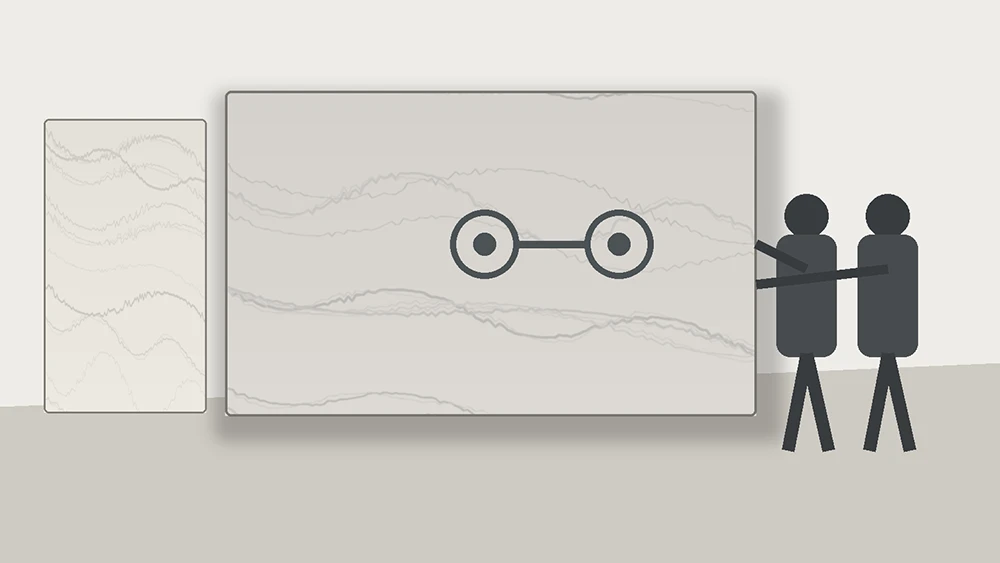
Accurate site measurement is the foundation of every successful cut-to-size stone project. Walls, floors, columns, and openings are rarely perfectly straight or square, and dimensions shown on architectural drawings may differ from actual site conditions.
When measurements are incomplete or inaccurate, fabricated stone pieces may not fit, joints may fail to align, edge profiles may terminate in the wrong position, or installers may be forced to carry out excessive cutting on site. This creates material waste, delays, inconsistent finishing, and a greater risk of breakage.
Best practice
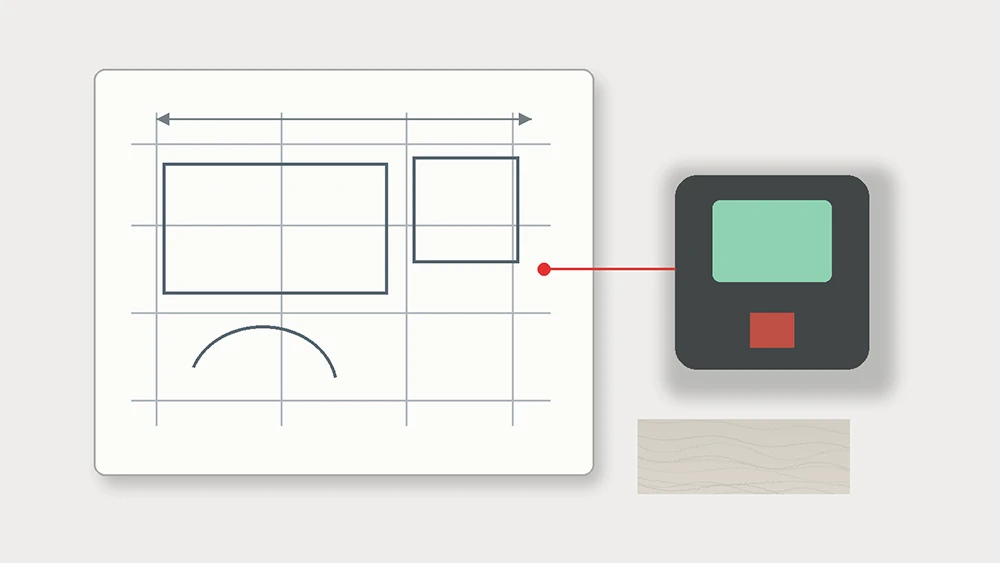
Verify finished site dimensions before production, identify all penetrations and edge conditions, and prepare detailed shop drawings showing sizes, joints, cut-outs, vein direction, support points, and installation references.
2. Poor Substrate Preparation
A beautiful stone finish cannot compensate for an unstable or uneven substrate. Concrete floors, screeds, cement boards, block walls, and other supporting surfaces must be clean, structurally sound, dry enough for installation, and sufficiently flat for the selected stone size.
Dust, oil, loose particles, excessive moisture, weak concrete, existing cracks, and surface irregularities can all reduce bond strength. An uneven substrate may force installers to use excessive adhesive thickness, which can create shrinkage, voids, delayed curing, and stone lippage.
Uneven substrates, voids, cracks, and rising moisture can cause hollow spots, lippage, staining, and stone failure.
Before installation begins, the substrate should be checked for flatness, strength, contamination, cracks, and moisture. Structural cracks must be evaluated rather than simply covered. In wet areas or exterior applications, the installation may also require a compatible waterproofing or crack-isolation system.
3. Using the Wrong Adhesive or Mortar
Stone type, slab size, substrate condition, installation location, backing treatment, and moisture exposure all affect adhesive selection. A setting material that works for one stone may cause discoloration, weak bonding, or delayed failure in another.
Light-colored marble and translucent stone generally require a suitable white adhesive to reduce the risk of dark shadowing. Resin-backed slabs, mesh-backed pieces, moisture-sensitive stone, large-format panels, exterior cladding, and wet-area installations may need specialized products or additional surface preparation.
Using ordinary gray mortar beneath light stone can lead to visible color changes. Applying adhesive after it has begun to skin over can reduce contact. Thick, uneven mortar beds can shrink and create stress. For reliable performance, the full installation system must be compatible with both the stone and the substrate.
4. Failure to Dry Lay and Match the Stone
Natural variation is one of the main reasons designers choose stone, but uncontrolled variation can make a finished installation look random or unbalanced. Color, veining, fissures, crystal structure, and background tone can vary from slab to slab and even within the same block.
Without dry laying, numbering, and layout approval, installers may place highly contrasting pieces next to each other, reverse the intended vein direction, interrupt a continuous pattern, or mix different production batches in one visible area.
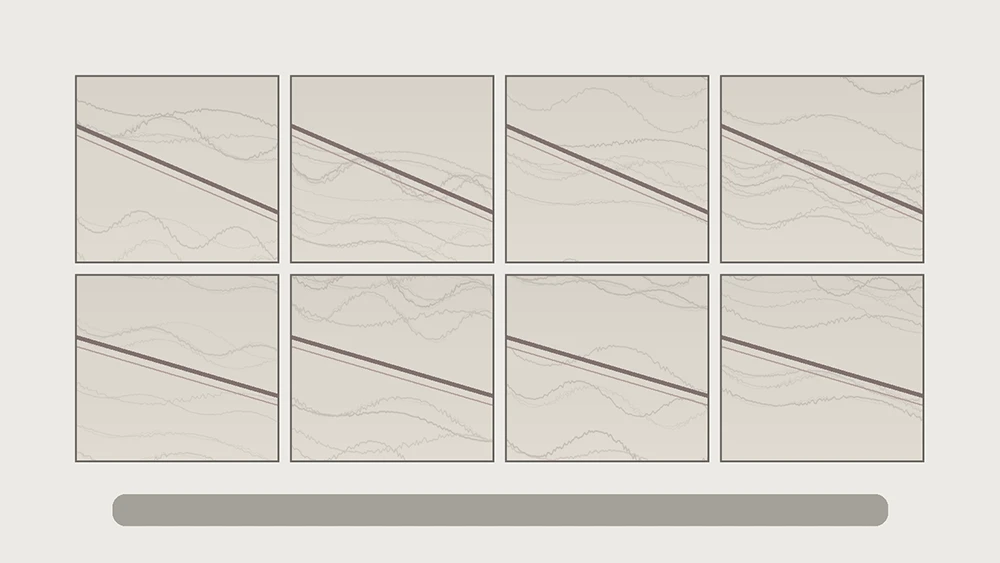
Dry laying allows the project team to review color distribution, vein direction, joint alignment, and piece numbering before installation.
For large floors, feature walls, book-matched panels, staircases, and reception areas, the supplier should arrange the pieces in advance, photograph the full layout, mark each piece, and provide an installation sequence. This greatly improves visual consistency and reduces on-site decision-making.
5. Uneven Joints and Stone Lippage
Lippage is the difference in height between the edges of adjacent stone pieces. It is especially noticeable on polished floors, under low-angle lighting, and in large-format installations.
Common causes include uneven substrates, inconsistent stone thickness, warped slabs, excessive adhesive build-up, poor leveling, and uncontrolled joint width. Even small height differences can create visible shadow lines, affect cleaning, and increase trip risk.
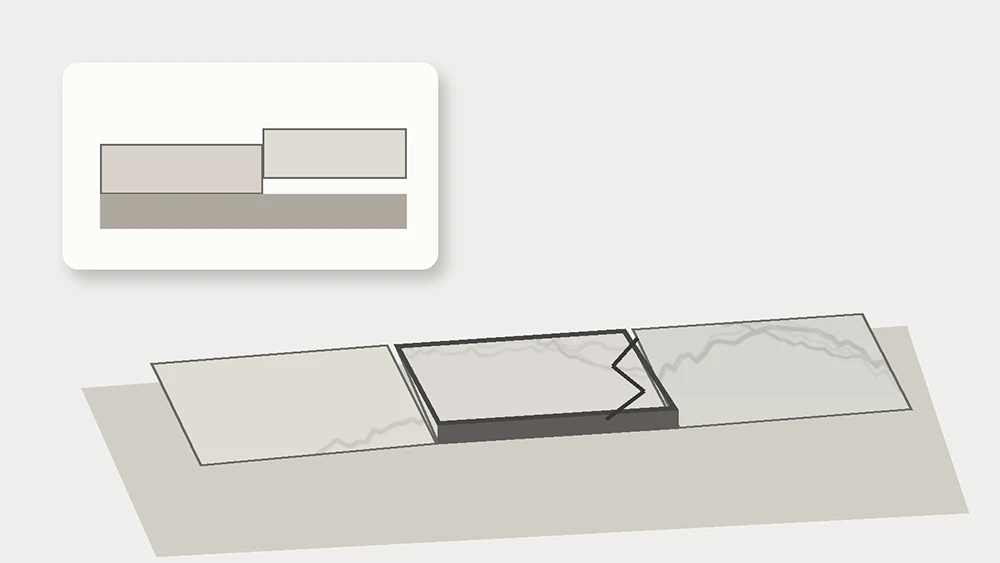
Uneven support and inconsistent adhesive thickness can create lippage, stress concentration, and cracking.
To reduce lippage, the installation team should verify slab flatness and thickness, prepare a flat substrate, maintain consistent joint spacing, use suitable leveling methods, and regularly check the finished surface during installation rather than after the adhesive has cured.
6. Cracking and Edge Damage
Cracking is one of the most expensive problems in natural stone projects because the damaged piece may already be fabricated, transported, and installed before the defect becomes visible. Cracks can result from structural movement, insufficient support, impact during handling, stress around cut-outs, weak internal fissures, or missing movement joints.
Countertop sink and cooktop openings are particularly vulnerable when the remaining stone strips are narrow or sharp inside corners concentrate stress. Large wall panels and stair pieces may also crack if lifting points, anchors, or temporary supports are poorly positioned.
Weak areas should be identified during slab selection and fabrication. Depending on the application, reinforcement may include fiberglass mesh, resin filling, steel rods, backing panels, mechanical anchors, or additional support framing. Movement joints should be incorporated where required instead of being filled rigidly with grout.
7. Staining and Discoloration
Natural stone is porous to different degrees, so water, oil, rust, pigment, construction chemicals, adhesives, and cleaning products can change its appearance. Light-colored limestone, marble, and some quartzites are particularly sensitive to contamination from the back or edges.
Common installation-related stains include dark moisture patches, rust marks from metal components, adhesive shadowing, grout haze, oil absorption, and discoloration caused by acidic cleaners. Marble can also lose its polish when exposed to acidic substances, creating dull etched areas that may be mistaken for stains.
Prevention starts with clean handling, suitable setting materials, dry storage, and proper protection during construction. Depending on the stone and application, sealing the face, edges, or all six sides may be considered, but the sealer must remain compatible with the adhesive and must not trap moisture inside the installation.
8. Efflorescence and Moisture Problems
Efflorescence appears as a white powdery or crystalline deposit on the stone surface or joints. It is usually a symptom of moisture moving through cement-based materials and carrying soluble salts to the surface.
Moisture can enter from a wet substrate, failed waterproofing, poor exterior drainage, leaking joints, rising damp, or water penetration behind wall cladding. In some stones, moisture also causes darkening, edge staining, curling, or prolonged color variation.
Water movement can lead to dark patches, efflorescence, and long-term discoloration if drainage and waterproofing are not controlled.
Wet areas and exterior zones require a complete moisture-management strategy, including waterproofing, drainage, slopes, compatible joints, and suitable adhesives. Stone should not be sealed while it is still carrying installation moisture, because premature sealing can slow drying and trap visible marks.
9. Hollow Spots and Poor Bonding
Hollow areas are often detected by tapping the stone surface and hearing a different sound. A hollow sound does not always mean immediate failure, but extensive voids can reduce load distribution, increase impact sensitivity, and allow water to collect beneath the stone.
Common causes include spot bonding, insufficient adhesive coverage, dust on the back of the stone, dry adhesive skin, incorrect trowel technique, or failure to back-butter large pieces. Heavy slabs may appear stable at first but loosen over time when only a small percentage of the back surface is bonded.
Installers should follow the adhesive manufacturer's requirements, collapse trowel ridges, periodically lift a piece to verify coverage, and use back-buttering when necessary. Exterior, wet-area, and heavy-traffic installations generally require especially high and continuous contact.
10. Improper Sealing and Maintenance
Sealers can improve stain resistance, but they cannot repair poor waterproofing, weak bonding, or structural movement. They must be selected according to stone porosity, finish, location, expected contaminants, and desired appearance.
Applying too much sealer can leave sticky residue or uneven sheen. Applying it to a damp surface can trap moisture. Using an unsuitable topical coating can change slip resistance or make maintenance more difficult. In addition, different stones respond differently to cleaning chemicals.
Routine care should use pH-neutral products formulated for natural stone. Acidic cleaners should not be used on acid-sensitive materials such as marble, limestone, and travertine. Maintenance instructions should be handed over to the owner at project completion so that the installed surface is not damaged by improper cleaning.
How to Prevent Natural Stone Installation Problems
- Confirm the stone type, finish, thickness, and intended application.
- Complete accurate site measurements before fabrication.
- Prepare and approve detailed shop drawings.
- Inspect the substrate for flatness, strength, cracks, and moisture.
- Select adhesives, grout, waterproofing, and sealers as one compatible system.
- Dry lay and number visible stone pieces before installation.
- Check color range, vein direction, surface finish, thickness, and edge quality.
- Provide movement joints and suitable support where required.
- Protect finished stone from other construction trades.
- Use installers experienced with the specific stone and application.
- Provide the owner with correct cleaning and maintenance instructions.
Most installation failures can be prevented through coordinated planning rather than corrected after completion. Stone selection, slab inspection, shop drawings, cut-to-size production, dry laying, edge finishing, packing, logistics, installation materials, and site workmanship should be treated as one connected project process.
Working with an experienced natural stone supplier helps reduce material inconsistency, fabrication mistakes, installation delays, and avoidable replacement costs. For complex residential, hospitality, retail, commercial, or public projects, early technical coordination is often more valuable than solving problems after the stone has arrived on site.