


Water absorption is an important factor in evaluating the durability and application suitability of natural stone. Different materials, including marble, granite, quartzite, and limestone, have different absorption characteristics due to their mineral composition and pore structure.
For stone buyers, architects, and contractors, understanding these differences helps reduce material risks and select suitable stone for bathrooms, countertops, exterior facades, and commercial projects.
This guide examines water absorption rates, testing standards, material comparisons, and key considerations for natural stone procurement.
What Is the Water Absorption Rate of Natural Stone?
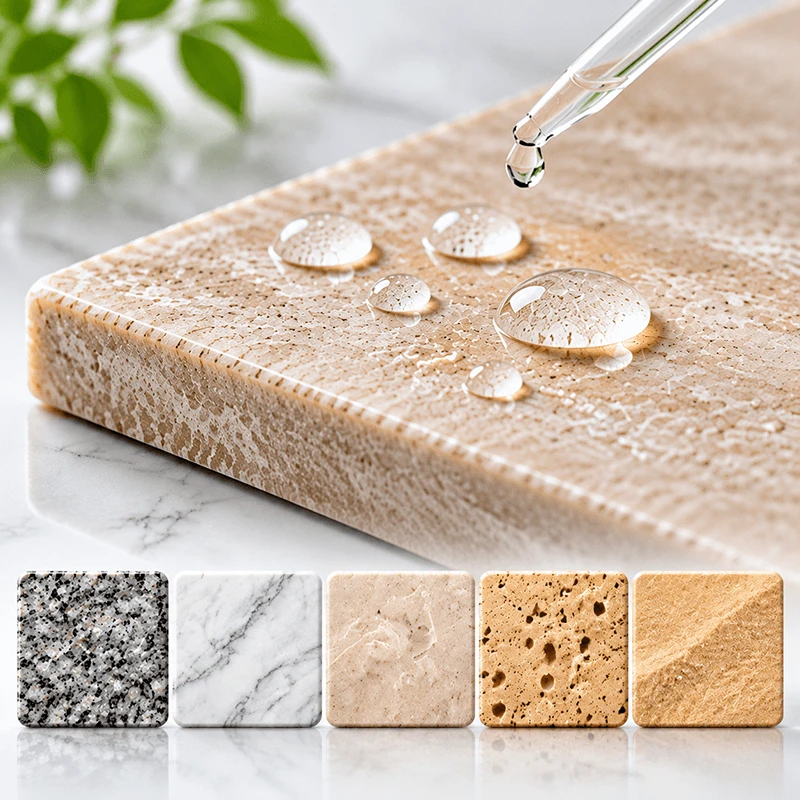
Definition And Calculation Of Water Absorption
Water absorption rate refers to the percentage increase in the weight of a dry stone specimen after absorbing water under a specified test procedure.
It is commonly expressed as a percentage of the original dry weight.
The calculation is:
WA(%)=[(Ws-Wd)/Wd]x100
Where:
WA= Water absorption percentage.
Ws = Weight of the saturated stone specimen.
Wd = Weight of the oven-dried stone specimen.
A lower percentage generally indicates lower water uptake under the specified testing conditions. It does not mean that the stone is completely waterproof.
International Testing Standards: ASTM C97/C97M And EN 13755
For commercial natural stone procurement, water absorption should be measured using a recognized laboratory test method.
Two commonly referenced standards are:
|
Standard |
Test Description |
Application |
|---|---|---|
|
ASTM C97/C97M-26 |
Absorption and bulk specific gravity of dimension stone |
North American and international stone procurement |
|
EN 13755:2008 |
Water absorption at atmospheric pressure |
European natural stone testing |
ASTM C97/C97M covers absorption and bulk specific gravity testing for dimension stone, excluding slate. The current 2026 edition specifies the applicable specimen preparation and test procedures.
ASTM Store+1
EN 13755 determines water absorption by immersing dried natural stone specimens in water at atmospheric pressure and measuring the resulting mass increase.
For project procurement, buyers should confirm that laboratory reports identify the following:
Applicable test standard and edition.
Commercial and petrographic stone identification.
Quarry or material origin.
Specimen dimensions and quantity.
Individual and average absorption results.
Laboratory name and testing date.
These details help procurement teams compare materials using consistent test conditions.
Porosity and Water Absorption: Understanding the Relationship
Water absorption is closely related to the pore structure of natural stone.
Natural stone contains pores of different sizes and configurations. Some are interconnected and allow water to penetrate, while others are isolated and do not contribute equally to water absorption.
|
Stone Structure |
Physical Characteristics |
Potential Effect |
|---|---|---|
|
Low open porosity |
Limited interconnected pore space |
Generally lower water uptake |
|
High open porosity |
More connected pores |
Generally higher water uptake |
|
Microcracks |
Small fractures within the mineral structure |
May increase moisture penetration |
|
Resin-filled fissures |
Treated openings and cracks |
May change local liquid penetration |
|
Dense crystalline structure |
Compact mineral arrangement |
Often associated with lower absorption |
Open porosity and water absorption are related but are not interchangeable measurements.
A stone with 1% open porosity does not necessarily have 1% water absorption by weight. The two properties use different measurement bases.
For large-format stone projects, both the material's pore structure and its measured absorption value should be considered.
How Water Absorption Affects Natural Stone Performance
Freeze-Thaw Resistance in Exterior Applications
Water absorption is an important consideration for stone installed in climates with repeated freezing and thawing.
When water enters interconnected pores and subsequently freezes, ice formation can generate internal stresses. Repeated freeze-thaw cycles may contribute to microcracking, surface scaling, and material deterioration.
The actual risk depends on several factors:
Water absorption and degree of saturation.
Pore size and connectivity.
Mineral composition.
Existing fissures and microcracks.
Number and severity of freeze-thaw cycles.
Installation drainage and moisture exposure.
A stone with low water absorption may have a lower moisture-related risk, but this property alone cannot establish its frost resistance.
For exterior paving, facade cladding, and landscape projects in cold climates, buyers should request additional freeze-thaw testing.
Relevant testing standard: EN 12371 – Natural Stone: Determination of Frost Resistance.
This standard evaluates the effects of freezing and thawing cycles on natural stone and measures changes in relevant performance characteristics.
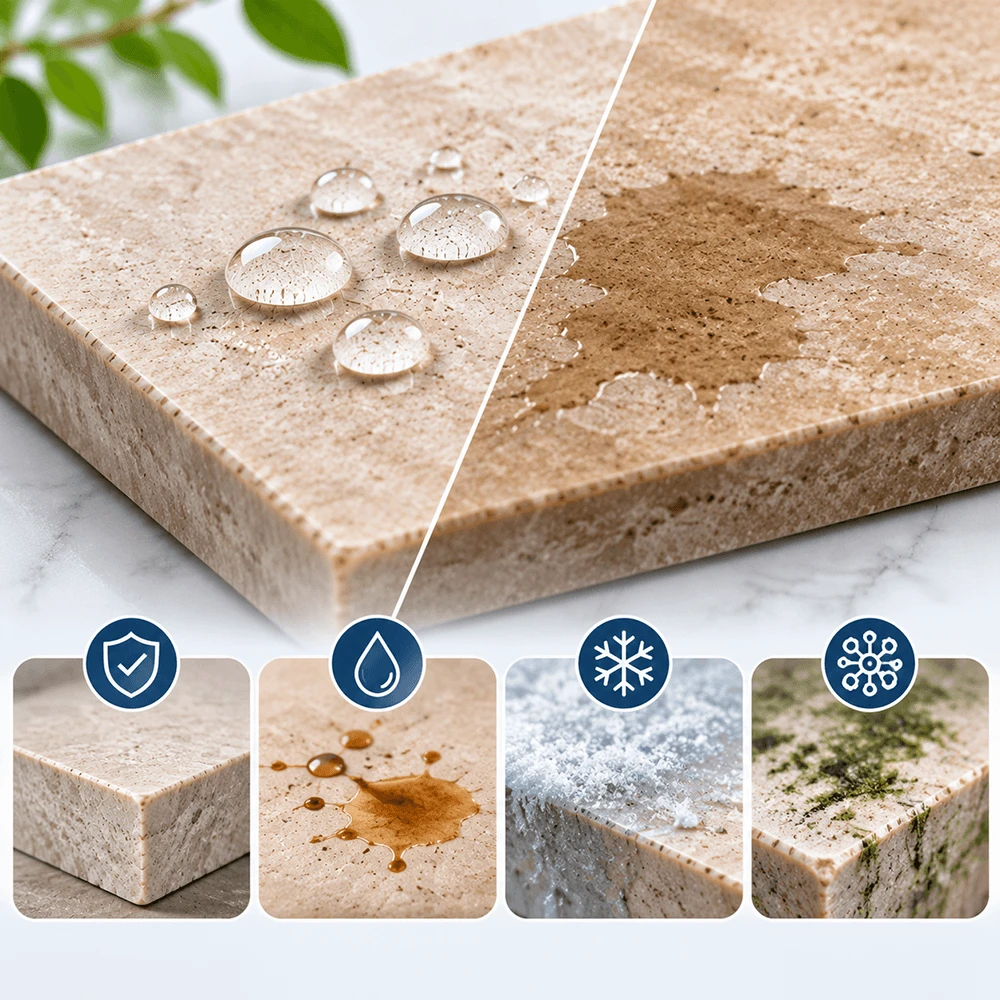
Stain Resistance and Surface Maintenance
Water absorption also influences how liquids interact with natural stone surfaces.
Materials with higher open porosity may allow water-based liquids and contaminants to penetrate more easily.
This can increase the likelihood of:
Oil and grease stains.
Watermarks and moisture discoloration.
Dirt accumulation within surface pores.
Increased cleaning requirements.
Visible changes in appearance.
However, water absorption and stain resistance are not identical properties.
For example, marble may have a relatively low absorption rate while remaining vulnerable to chemical etching from acidic substances such as lemon juice, vinegar, and certain cleaning products.
For kitchen countertops and bathroom vanity surfaces, buyers should evaluate both absorption and chemical sensitivity.
Dimensional Stability and Long-Term Durability
Repeated moisture exposure can influence the performance of certain natural stones.
Depending on mineral composition and pore structure, moisture movement may contribute to:
Mineral oxidation and discoloration.
Salt crystallization.
Surface deterioration.
Changes around existing fissures.
Deterioration under repeated wet-dry cycles.
These risks are particularly relevant to exterior wall cladding, swimming pool surroundings, and continuously wet environments.
Stone selection should therefore consider the entire exposure environment rather than relying on a single laboratory measurement.
Water Absorption Rates of Common Natural Stone Types
Natural stone categories have different typical absorption characteristics. However, actual values vary significantly between individual varieties, quarry sources, and geological formations.
The following table provides indicative industry classifications published by the World Natural Stone Association (WONASA). These figures are reference ranges, not guaranteed specifications for every commercial stone.
World Natural Stone Association
Typical Water Absorption Classification by Stone Type
|
Stone Type |
Low Absorption |
Medium Absorption |
High Absorption |
|---|---|---|---|
|
Quartzite |
Below 1% |
1–3% |
Above 3% |
|
Granite |
Below 0.3% |
0.3–1% |
Above 1% |
|
Marble |
Below 0.1% |
0.1–0.8% |
Above 0.8% |
|
Limestone |
Below 2% |
2–7% |
Above 7% |
|
Sandstone |
Below 3% |
3–10% |
Above 10% |
Marble: Dense Crystalline Structure with Material-Specific Variations
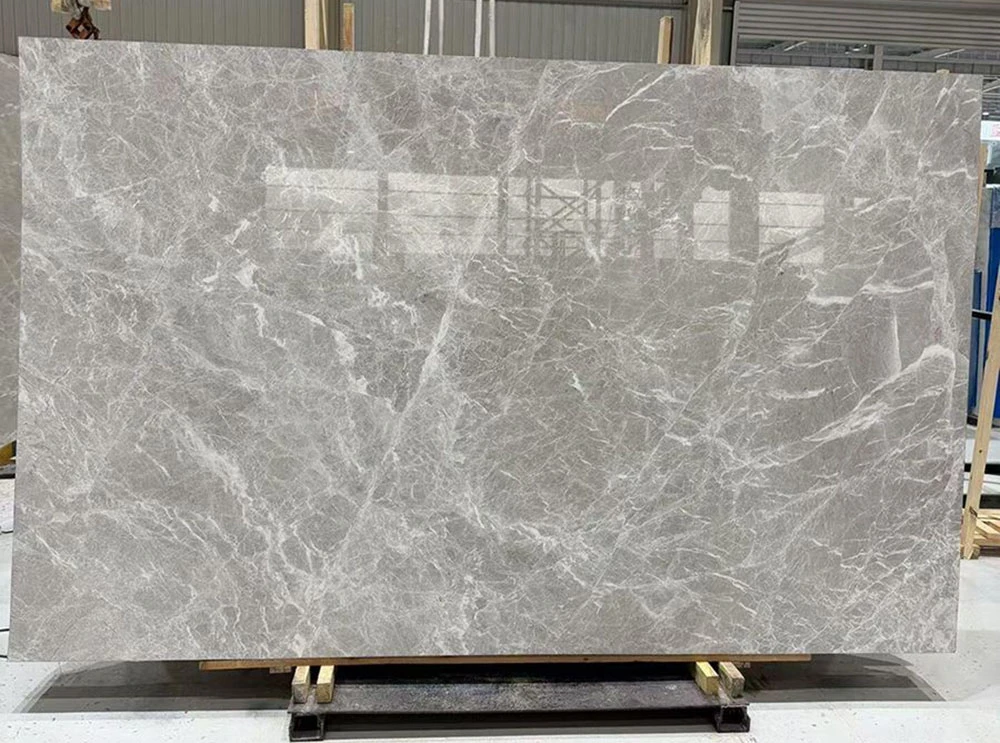
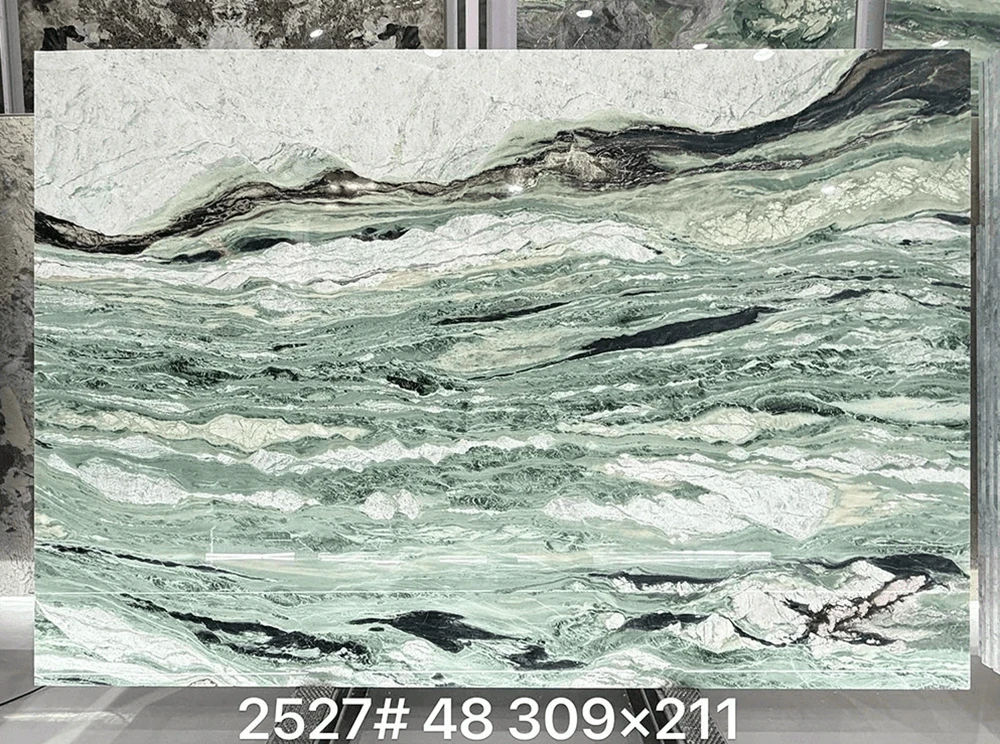
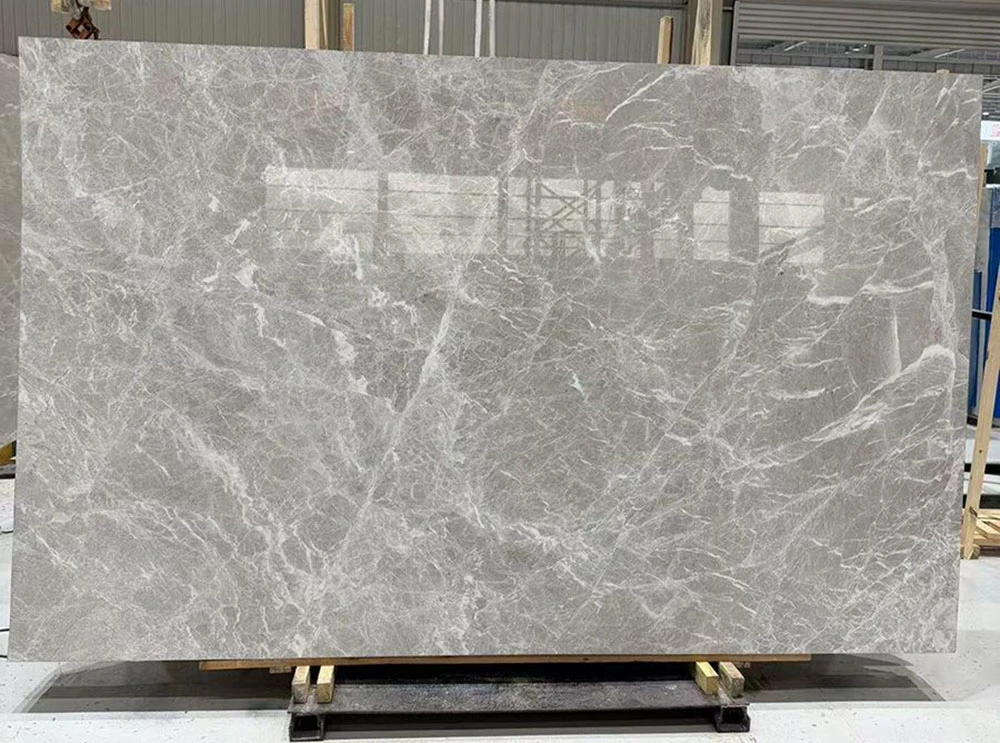
Marble is a metamorphic rock primarily composed of recrystallized carbonate minerals, mainly calcite or dolomite.
Its water absorption characteristics depend on mineral composition, grain structure, natural fissures, and geological formation.
Some dense marble varieties have very low absorption rates, while more porous varieties may require additional surface protection.
Procurement considerations:
Request ASTM C97/C97M absorption test results.
Check visible fissures and filled veins.
Evaluate water and oil stain resistance.
Confirm sealer compatibility.
Approve representative slabs before mass production.
Marble is frequently specified for interior flooring, vanity tops, wall cladding, hotel reception counters, and decorative stone furniture.
Granite: Generally Low Water Absorption
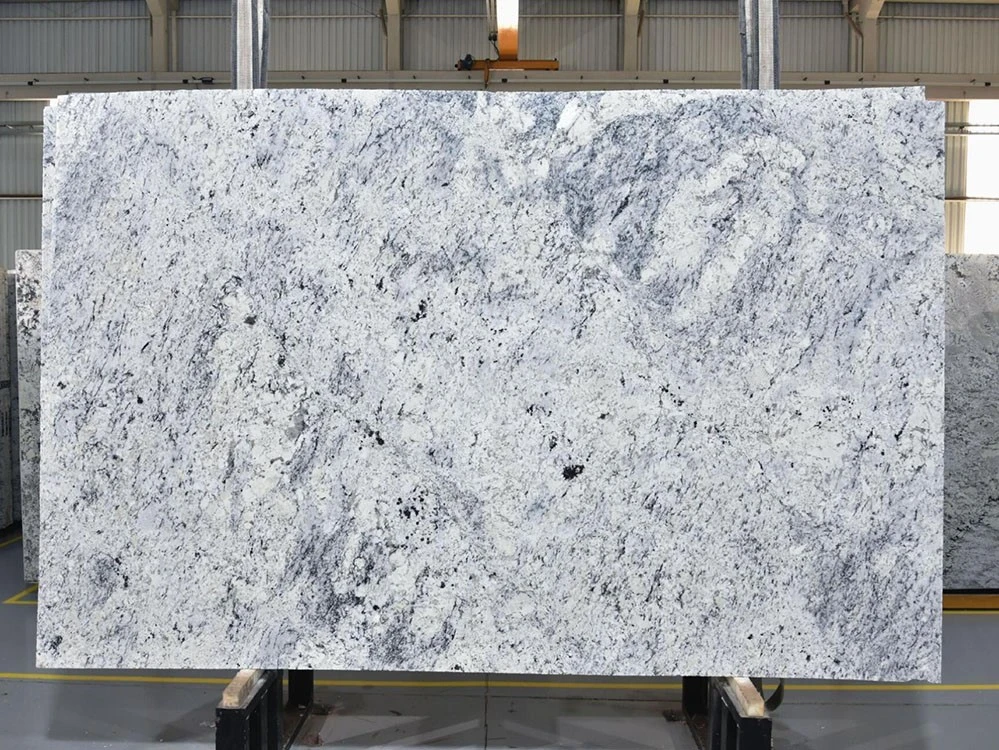
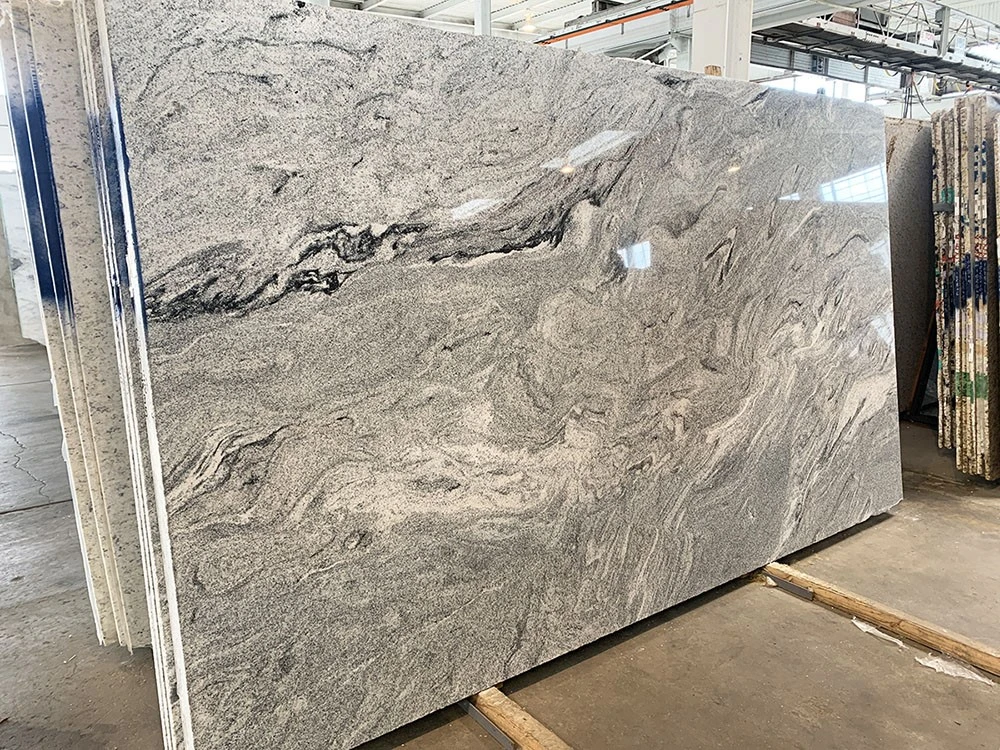
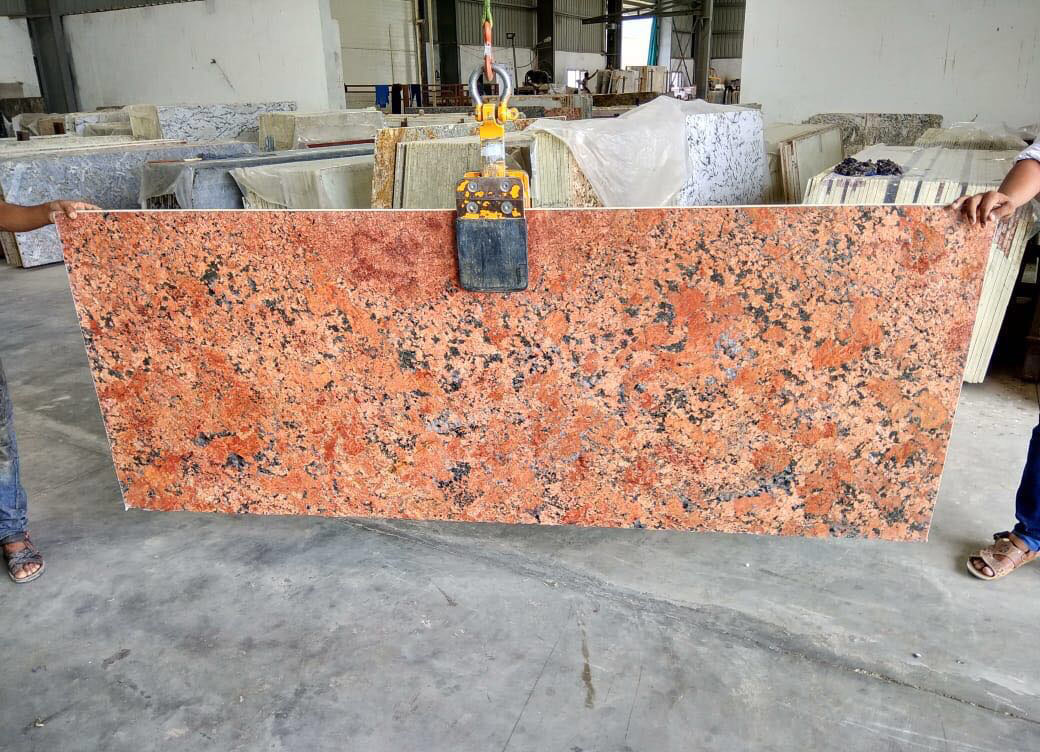
Granite is an igneous rock composed primarily of quartz, feldspar, and other minerals.
Many commercial granite varieties have relatively low water absorption because of their compact crystalline structure.
However, granite is not impermeable. Microfractures, mineral boundaries, and geological variations can affect moisture penetration.
Granite is frequently specified for:
Kitchen countertops.
Commercial flooring.
Exterior paving.
Building facades.
High-traffic architectural surfaces.
For commercial projects, procurement teams should verify absorption, compressive strength, abrasion resistance, and other application-specific test results.
Quartzite: Dense Structure and Low Absorption in Selected Varieties
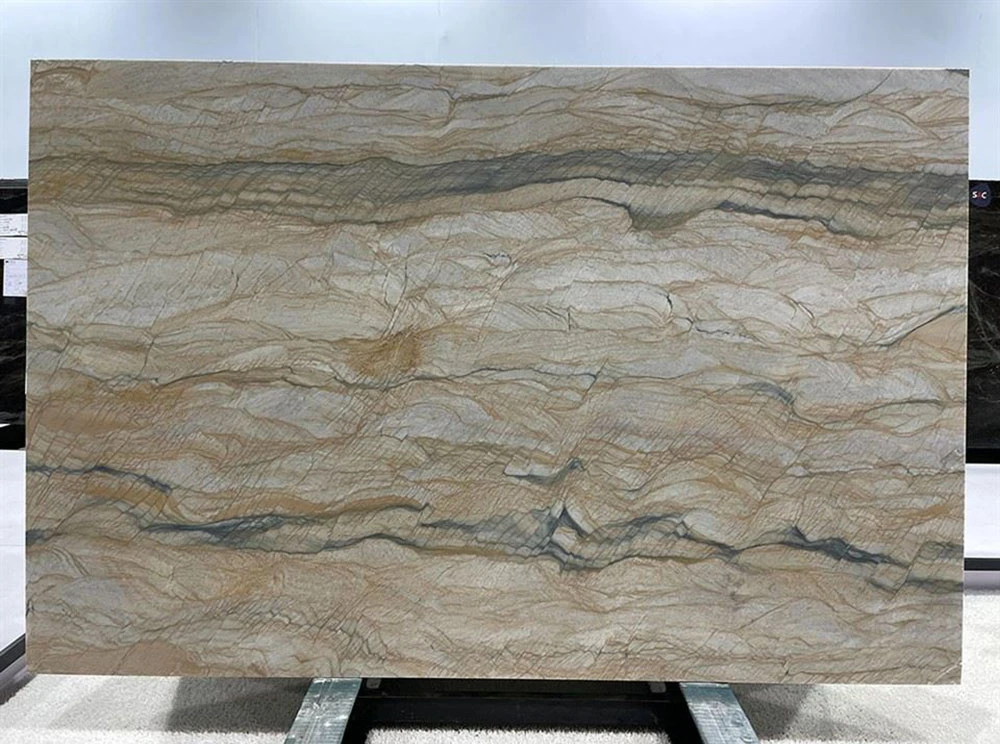
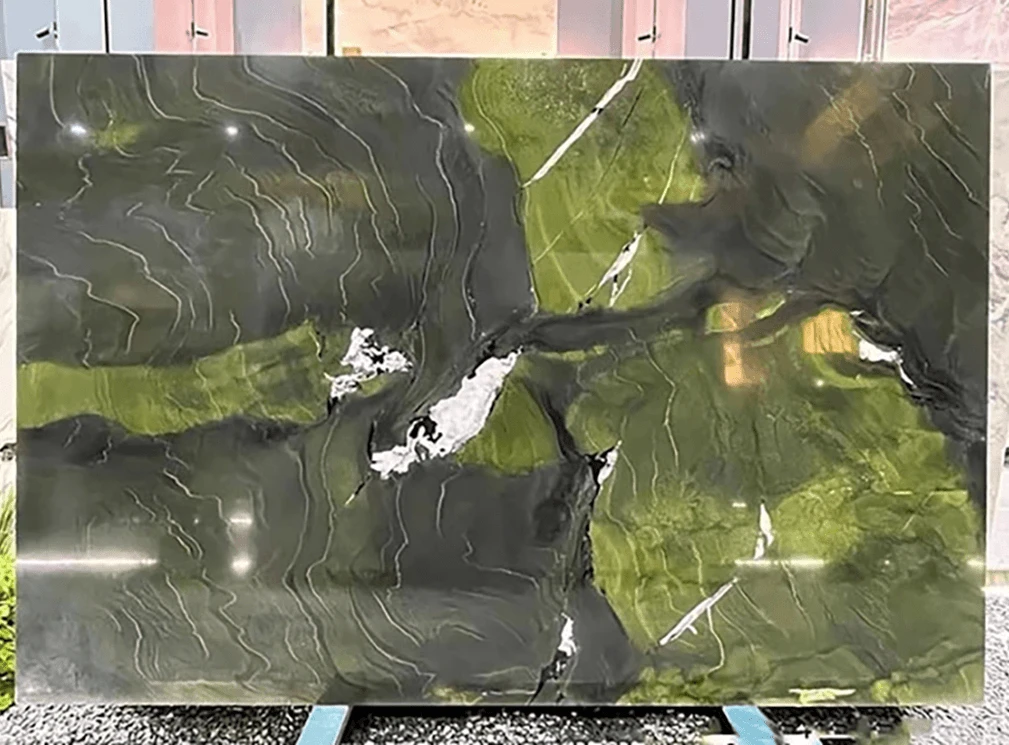
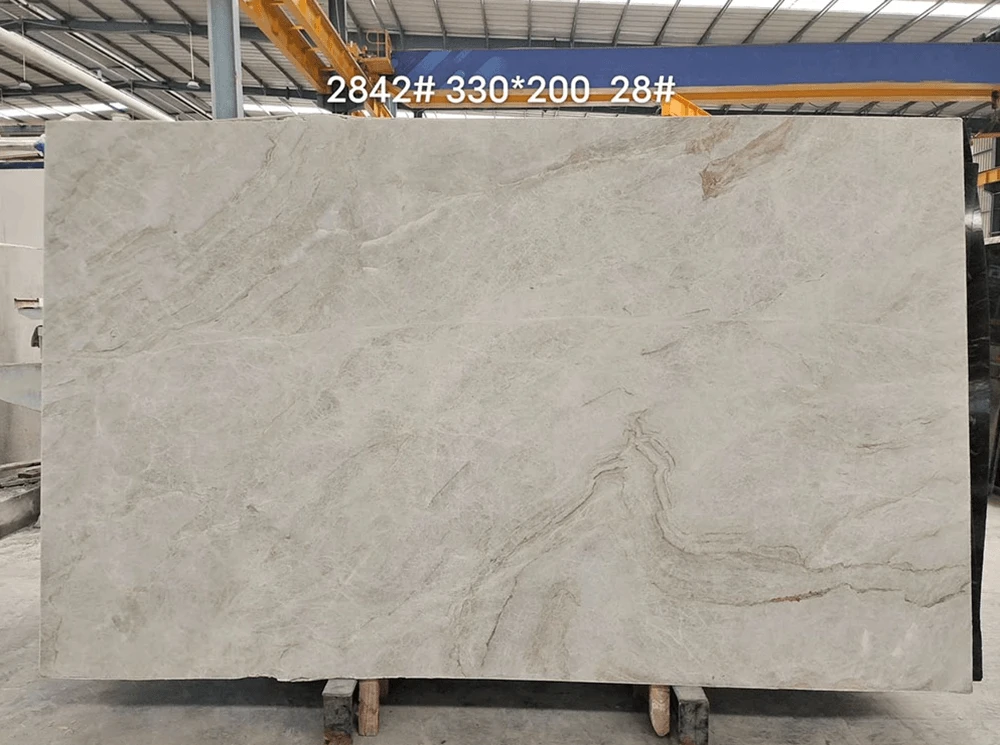
Quartzite is a metamorphic rock formed from quartz-rich sandstone under heat and pressure.
Many quartzite varieties have a dense structure and relatively low water absorption. However, actual values differ according to geological formation, mineral content, and natural fractures.
One documented example is Taj Mahal Quartzite.
According to Brachot's technical datasheet, the tested material has the following properties:
|
Technical Property |
Reported Value |
|---|---|
|
Water absorption |
0.26% |
|
Open porosity |
0.67% |
|
Apparent density |
2,610 kg/m³ |
|
Mohs hardness |
7 |
|
Flexural strength |
18.4 ± 2.7 MPa |
|
Compressive strength |
172.2 ± 22.6 MPa |
These figures apply to the documented material and should not be generalized to every stone sold under the Taj Mahal trade name.
Taj Mahal Quartzite is frequently selected for:
Kitchen countertops.
Bathroom vanity tops.
Hotel reception counters.
Interior wall cladding.
Premium residential projects.
B2B Product Recommendation
For buyers sourcing quartzite slabs for architectural and interior projects, explore our [Taj Mahal Quartzite Slabs – Wholesale Natural Stone Supply].
Request current slab photographs, available bundle quantities, technical specifications, and bulk pricing from our China stone factory.
Limestone: Greater Variation in Porosity
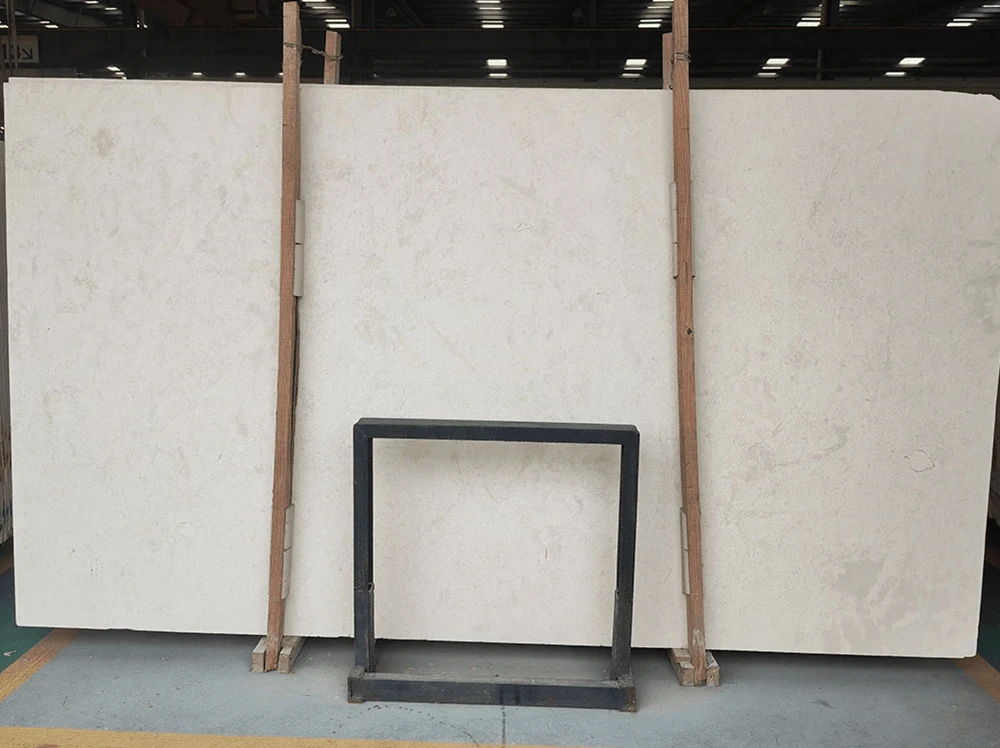
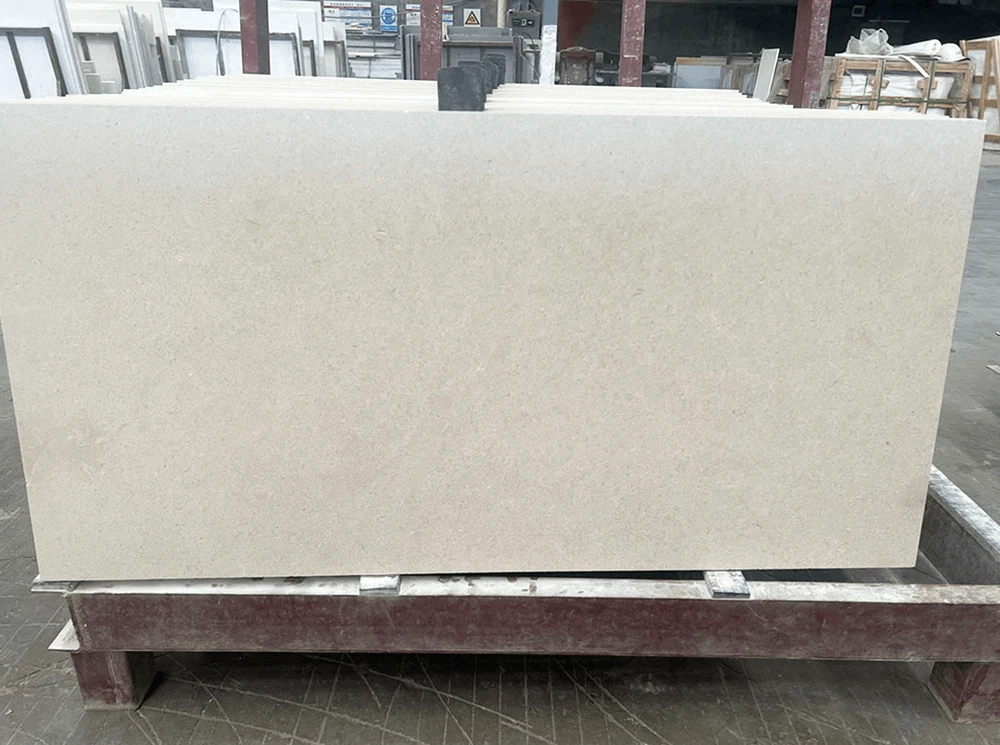
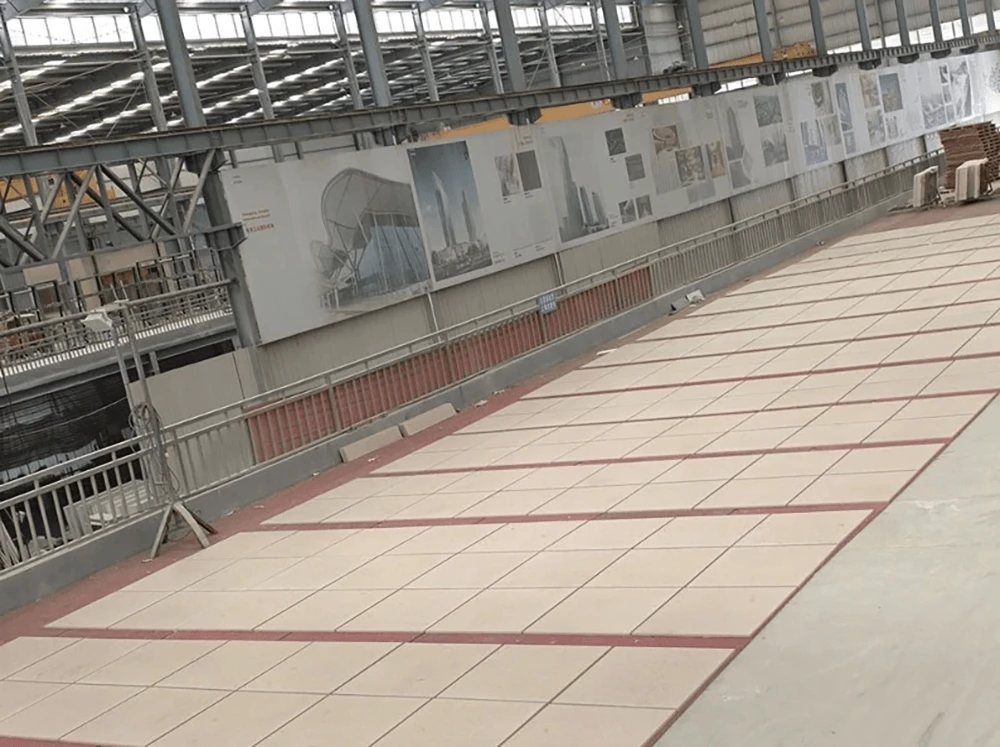
Limestone is a sedimentary rock primarily composed of calcium carbonate.
Its absorption characteristics vary significantly depending on fossil content, grain structure, cementation, and natural pore distribution.
Some dense limestone varieties have relatively low absorption, while porous limestone may absorb considerably more water.
For limestone procurement, buyers should prioritize:
Water absorption according to ASTM C97/C97M or EN 13755.
Bulk density.
Compressive strength.
Freeze-thaw performance where applicable.
Surface treatment compatibility.
Limestone is commonly used for interior wall cladding, flooring, facade panels, architectural detailing, and landscape applications, subject to material-specific testing.
How to Select Natural Stone According to Water Absorption
Selecting natural stone requires matching its physical properties to the actual installation environment.
A material suitable for a dry interior wall may not be appropriate for exterior paving or a continuously wet shower area.
Bathroom and Wet-Area Applications
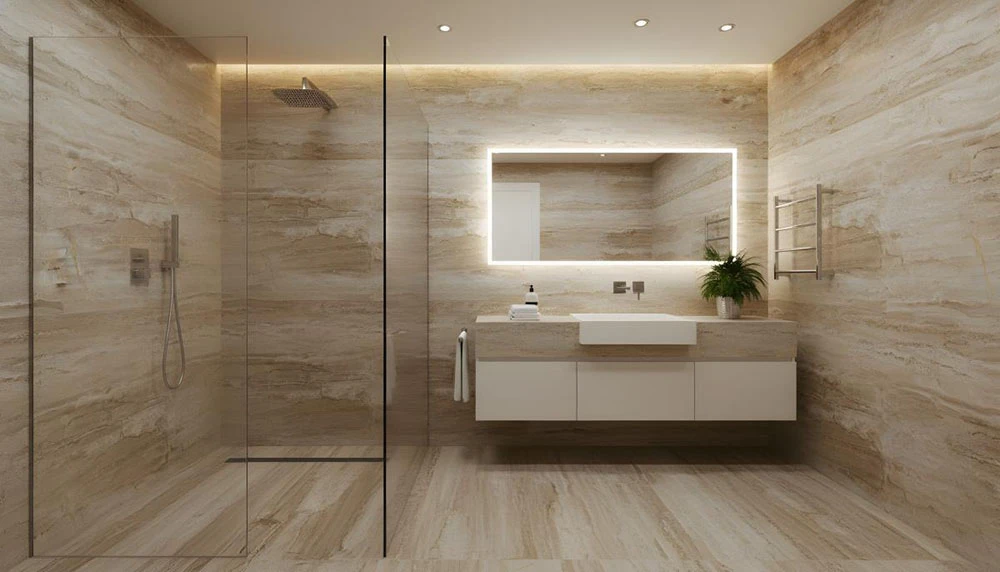
Bathrooms expose stone surfaces to water, cleaning chemicals, humidity, and repeated wet-dry cycles.
For bathroom applications, procurement teams should distinguish between wall cladding, vanity surfaces, and walking areas.
|
Application |
Main Selection Considerations |
|---|---|
|
Bathroom vanity tops |
Water absorption, oil staining, chemical sensitivity |
|
Shower walls |
Moisture exposure, mineral stability, surface maintenance |
|
Shower flooring |
Wet slip resistance, drainage, water absorption |
|
Bathroom wall cladding |
Surface consistency, fixing method, moisture exposure |
|
Bathroom countertops |
Stain resistance, sealer compatibility, cleaning requirements |
Low-absorption marble and quartzite may be suitable for selected bathroom applications, provided that their other technical properties meet project requirements.
For shower floors and continuously wet walking surfaces, wet slip-resistance testing is also required.
Exterior Facades and Wall Cladding
Exterior stone cladding is exposed to rainfall, temperature changes, UV radiation, airborne pollutants, and potentially freeze-thaw cycles.
Water absorption should be considered together with mechanical strength and installation engineering.
Recommended evaluation criteria include:
|
Test or Specification |
Relevant Standard |
Purpose |
|---|---|---|
|
Water absorption |
ASTM C97/C97M or EN 13755 |
Evaluates water uptake |
|
Compressive strength |
ASTM C170 |
Evaluates compressive loading performance |
|
Flexural strength |
ASTM C880 |
Evaluates bending performance |
|
Freeze-thaw resistance |
EN 12371 |
Evaluates frost-related deterioration |
|
Dimensional tolerances |
Project specifications |
Controls panel fabrication dimensions |
For mechanically fixed facade systems, stone strength and anchor design must be evaluated according to panel dimensions, support conditions, wind loads, and applicable building codes.
Low water absorption alone does not guarantee facade safety.
Kitchen Countertops and Commercial Surfaces
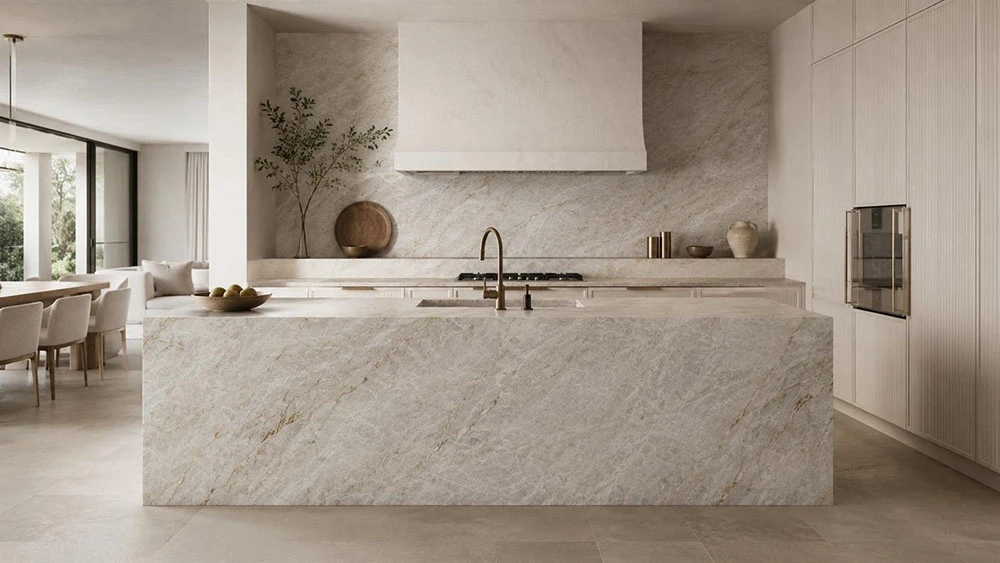
Kitchen countertops are exposed to water, cooking oils, acidic foods, cleaning products, and mechanical use.
For this reason, buyers should evaluate more than water absorption.
|
Evaluation Item |
Why It Matters |
|---|---|
|
Water absorption |
Indicates water uptake |
|
Oil absorption and stain testing |
Evaluates susceptibility to oil staining |
|
Chemical resistance |
Important for marble and carbonate-based stones |
|
Surface hardness |
Relevant to scratch resistance |
|
Flexural strength |
Important for countertop fabrication and support |
|
Sealer compatibility |
Determines suitability of protective treatment |
Granite and quartzite are commonly considered for kitchen countertops because many varieties offer good mechanical performance.
Marble can also be specified, but its sensitivity to acidic substances should be clearly communicated to the end user.
For large kitchen projects, buyers should approve a finished countertop sample before mass fabrication.
Outdoor Paving and Landscape Projects
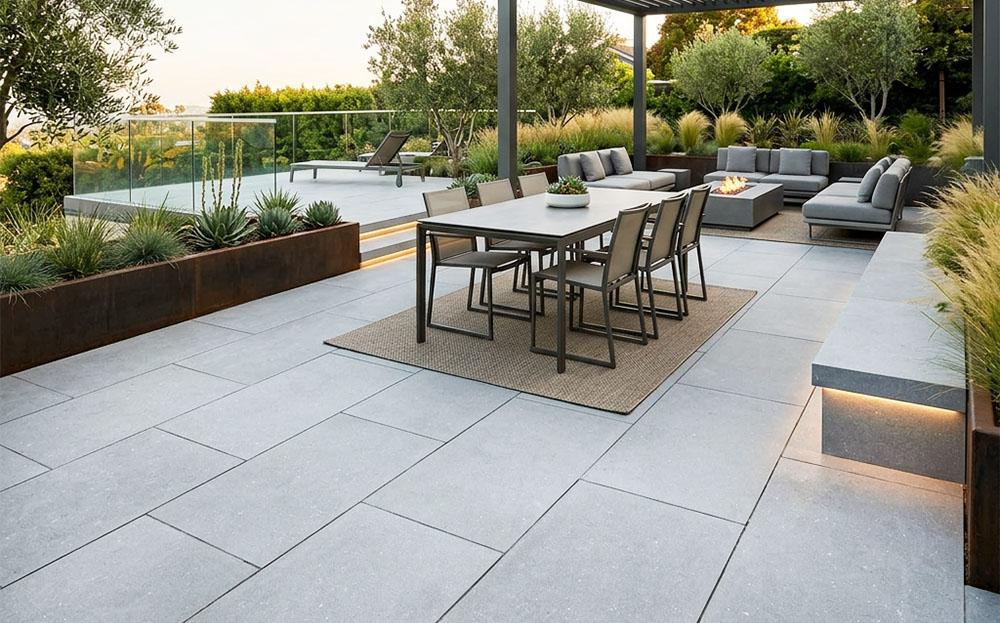
Outdoor paving requires consideration of water absorption, slip resistance, weathering, abrasion, and drainage.
For exterior stone installations, the selected material should be evaluated under expected environmental conditions.
Recommended considerations include:
Water absorption and open porosity.
Wet slip-resistance performance.
Freeze-thaw resistance in cold climates.
Abrasion resistance in pedestrian areas.
Surface drainage and installation slope.
Resistance to salt exposure where applicable.
Honed, brushed, sandblasted, and tumbled finishes may be considered depending on the stone type and project requirements.
The final surface should be tested using the applicable project standard rather than assuming that a particular finish is automatically slip-resistant.
Stone Backing Mesh Reinforcement: Processing and Export Protection
Natural stone processing requires more than cutting slabs to the required dimensions.
Certain stone varieties contain natural fissures, veins, or areas with limited structural continuity. During slab processing, handling, and transportation, these characteristics may increase the risk of breakage.
At Longton Stone, backing mesh reinforcement can be incorporated into the production process for selected stone materials according to their physical characteristics and processing requirements.
What Is Backing Mesh Reinforcement?
Backing mesh reinforcement involves applying a compatible resin system and reinforcing mesh to the rear surface of selected stone slabs.
The purpose is to provide additional support during processing, handling, and transportation.
Fiberglass mesh is commonly bonded to natural stone using epoxy or polyester resin systems. This technique is used particularly for slabs with limited structural soundness or materials requiring additional handling support.
The general process includes:
Surface Preparation: Clean the rear surface and remove dust and loose particles.
Resin Application: Apply a compatible resin system according to the material requirements.
Mesh Placement: Position reinforcing mesh evenly across the rear surface.
Curing: Allow the resin system to cure under controlled production conditions.
Inspection: Check mesh adhesion, surface coverage, and visible defects before subsequent processing.
Why Is Backing Mesh Important for Stone Export?
For international stone shipments, slabs may experience handling stress, vibration, and impact during loading and transportation.
Backing mesh can provide additional support for selected materials, particularly those with natural fissures or delicate structures.
Its main functions include:
Supporting stone slabs during handling.
Reducing the risk of certain handling-related breakages.
Supporting subsequent cutting and fabrication.
Providing additional reinforcement for selected fragile materials.
However, backing mesh is not a waterproofing system and does not change the inherent water absorption rate of the stone.
Buyers should also confirm the compatibility of the resin and mesh system with the intended installation adhesive. A mesh-backed slab introduces an additional bonding interface that must be considered during installation.
Quality Inspection Before Export
Before export, stone materials should undergo appropriate quality inspection.
Depending on the product and project specifications, inspection may cover:
Surface defects and visible fissures.
Slab dimensions and thickness.
Surface finish consistency.
Edge processing.
Mesh adhesion where reinforcement is specified.
Packaging and loading condition.
For customized stone products, inspection criteria should be agreed upon before mass production.
What Should Buyers Request from a Natural Stone Supplier?
For distributors, contractors, and large construction projects, technical documentation is an important part of material procurement.
Before placing a bulk order, buyers should request the following information.
|
Documentation |
Procurement Purpose |
|---|---|
|
Water absorption test report |
Evaluates water uptake |
|
Bulk density report |
Provides density information |
|
Compressive strength report |
Evaluates resistance to compressive loads |
|
Flexural strength report |
Supports structural and fabrication evaluation |
|
Freeze-thaw test report |
Relevant to cold-climate exterior applications |
|
Material photographs |
Confirms color and natural variation |
|
Slab dimensions |
Supports project quantity calculations |
|
Surface finish samples |
Confirms visual and tactile specifications |
|
Packing specifications |
Supports export transportation planning |
Why Should Buyers Request Batch-Specific Test Reports?
Natural stone is a geological material. Its physical characteristics may vary between quarries, blocks, and production batches.
A general product brochure may provide useful preliminary information, but it should not replace test results for the actual material being purchased.
For large commercial projects, buyers should establish acceptance criteria before production and confirm whether testing is required for each batch or material lot.
This reduces the risk of discrepancies between approved samples and delivered materials.
Technical Specifications for Bulk Stone Orders
For large-volume purchases, the purchase specification should identify the following information:
|
Specification |
Information to Confirm |
|---|---|
|
Material identification |
Commercial name, geological type, quarry origin |
|
Thickness |
Nominal thickness and permitted tolerance |
|
Dimensions |
Slab or cut-to-size dimensions |
|
Surface finish |
Polished, honed, leathered, brushed, etc. |
|
Edge processing |
Straight, beveled, mitered, custom profile |
|
Reinforcement |
Mesh, resin treatment, or unreinforced |
|
Quality acceptance |
Color range, fissures, repairs, dimensional limits |
|
Packaging |
Wooden bundles, protective separators, export requirements |
For example, a project specifying 20 mm marble slabs should establish its permitted thickness tolerance in the purchase agreement rather than assuming that every supplier follows the same tolerance.
For export shipments, packaging should also account for the slab dimensions, weight, lifting method, and destination requirements. Fumigated wooden bundles should be used where required by applicable import regulations.
Water absorption is an important technical parameter in natural stone selection. It affects moisture penetration, staining potential, maintenance requirements, and performance under different environmental conditions.
However, it should never be evaluated in isolation. Porosity, mineral composition, density, mechanical strength, surface treatment, installation methods, and exposure conditions all contribute to the long-term performance of natural stone.
For professional buyers and project developers, the most reliable approach is to combine laboratory test reports with application-specific engineering assessments.
At Longton Stone, we support international stone buyers with natural stone sourcing, processing, and customized architectural stone products. From marble and limestone to travertine, our team works with project requirements covering material selection, surface finishing, dimensional specifications, and export packaging.