



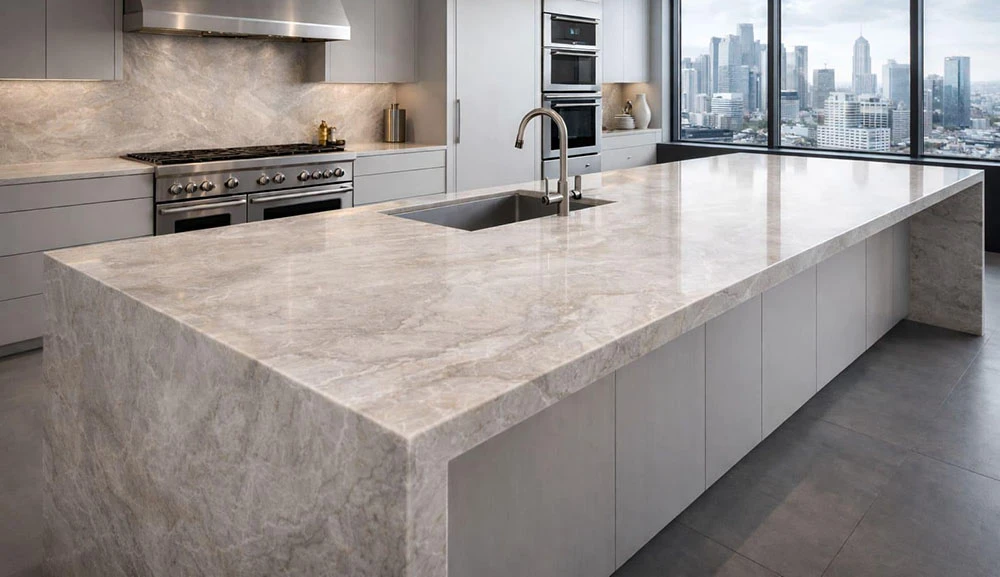
Commercial countertops are exposed to repeated abrasion, impact, moisture and chemical cleaning. In restaurants, hotel kitchens, bars and commercial reception areas, the wrong stone selection can lead to visible scratches, surface deterioration and higher maintenance costs.
Mohs hardness provides a practical reference for evaluating a natural stone's resistance to scratching. Materials such as quartzite, which contains quartz with a Mohs hardness of 7, generally offer better scratch resistance than calcite-rich marble, typically rated around 3–4. However, hardness alone does not determine overall countertop performance. Water absorption, flexural strength, chemical resistance, fabrication quality and installation conditions must also be considered.
For commercial buyers sourcing from a China natural stone manufacturer or supplier, understanding these properties helps establish measurable material specifications before placing bulk orders.
What Is the Mohs Hardness Scale? Definition and Testing Method
The Mohs hardness scale measures a mineral's resistance to scratching. It ranks minerals from 1 to 10, with talc at 1 and diamond at 10. For commercial countertop procurement, hardness is a useful indicator of surface scratch resistance, particularly in kitchens, hotel bars, restaurant service counters and high-use reception areas.
The scale was developed by German mineralogist Friedrich Mohs in 1812. It is based on a simple principle: a harder mineral can scratch a softer mineral.
Mohs Hardness Reference: 1–10 Mineral Scale
The following table shows the standard reference minerals used to establish the Mohs scale.
The Mohs hardness scale consists of 10 reference minerals, ranked from softest to hardest. Talc represents Level 1, followed by gypsum at Level 2, calcite at Level 3, fluorite at Level 4, apatite at Level 5, orthoclase feldspar at Level 6, quartz at Level 7, topaz at Level 8, corundum at Level 9, and diamond at Level 10. In natural stone applications, calcite (Mohs 3) is a major mineral in marble and limestone, while quartz (Mohs 7) is the primary component of quartz-rich stones such as quartzite. This difference in mineral hardness directly affects their resistance to surface scratching and makes the Mohs scale a useful reference when selecting materials for commercial countertops.
Natural stone is usually composed of several minerals rather than one uniform substance. Therefore, the Mohs rating of its main mineral components should not automatically be treated as the guaranteed hardness of the finished slab.
For example, quartz has a Mohs hardness of 7, while calcite has a hardness of 3. A quartz-rich quartzite and a calcite-rich marble will therefore behave differently under scratching conditions.
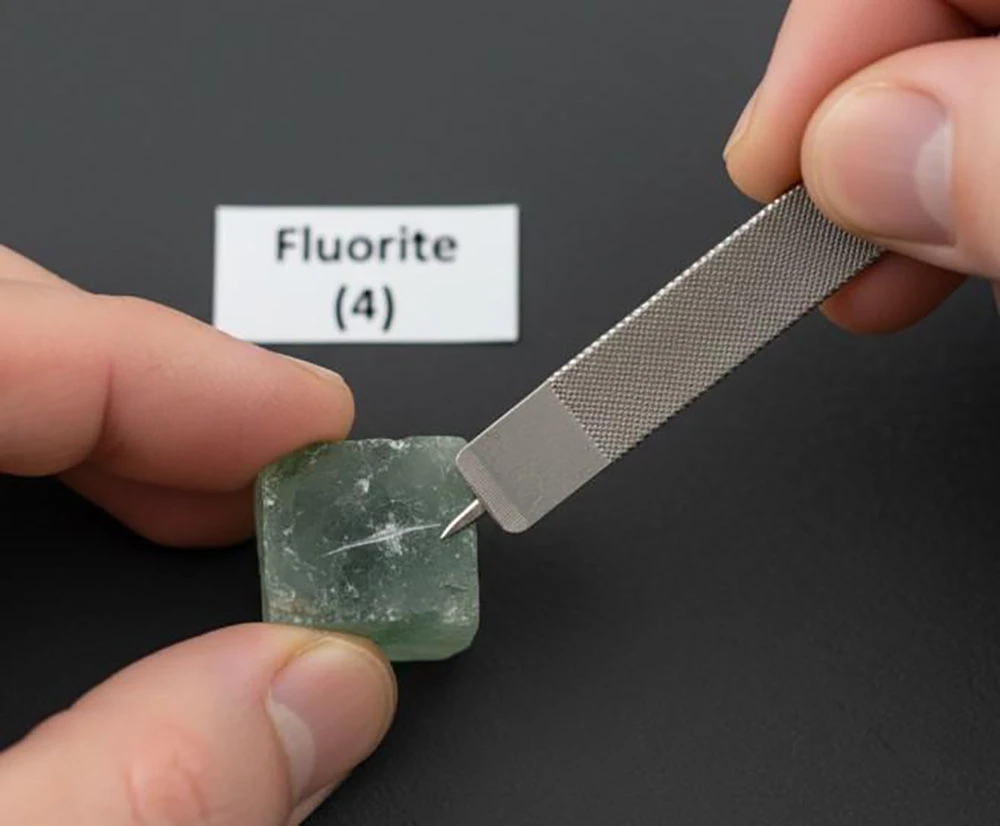
How Is Stone Mohs Hardness Tested?
In practical stone inspection, technicians use calibrated hardness picks to determine whether a particular tool can scratch the stone surface.
A typical comparative test involves:
Selecting a clean, representative area of the stone.
Using calibrated picks with different Mohs hardness ratings.
Applying controlled pressure to the surface.
Checking whether a permanent scratch has formed.
Repeating the test at several locations to account for mineral variation.
For commercial slab inspection, testing should cover multiple areas rather than relying on one convenient spot. Veins, mineral inclusions and differences in surface composition can affect individual readings.
Important: Mohs hardness is an ordinal scale, not a linear measurement. A material rated 8 is not twice as hard as one rated 4.
It also does not measure impact resistance, flexural strength, compressive strength or resistance to chemical staining. These properties require separate testin
Why Quartzite Is Recommended for Commercial Kitchen Countertops
Commercial kitchens expose countertop materials to repeated contact with metal utensils, cookware, food preparation equipment and cleaning tools. Scratch resistance and chemical resistance directly affect the frequency of surface maintenance and restoration.
Natural quartzite is frequently specified for these environments because its main mineral constituent, quartz, has a Mohs hardness of 7.
Quartzite vs. Granite vs. Marble: Physical Property Comparison
The following values are indicative mineral-based ranges, not certified specifications for every commercial slab. Actual performance depends on geological composition, mineral distribution and processing.
| Property | Quartzite | Granite | Marble |
|---|---|---|---|
| Main mineral composition | Quartz | Quartz and feldspar | Calcite or dolomite |
| Indicative Mohs hardness | Around 7 | Around 6–7 | Around 3–4 |
| Scratch resistance | High | Moderate to high | Relatively low |
| Resistance to common kitchen acids | Generally high | Variable; check composition | Generally low |
| Water absorption | Deposit-dependent | Deposit-dependent | Deposit-dependent |
| Sealing requirement | Depends on porosity | Depends on porosity | Depends on porosity |
| Suitable applications | Kitchen counters, bars, islands | Kitchens, counters, reception areas | Decorative counters, low-abrasion applications |
Quartzite is particularly suitable when a project requires a natural stone surface with a marble-like appearance and higher scratch resistance.
However, the commercial label "quartzite" should always be verified. Some stones sold under this name are actually dolomitic marble or other carbonate-rich materials.
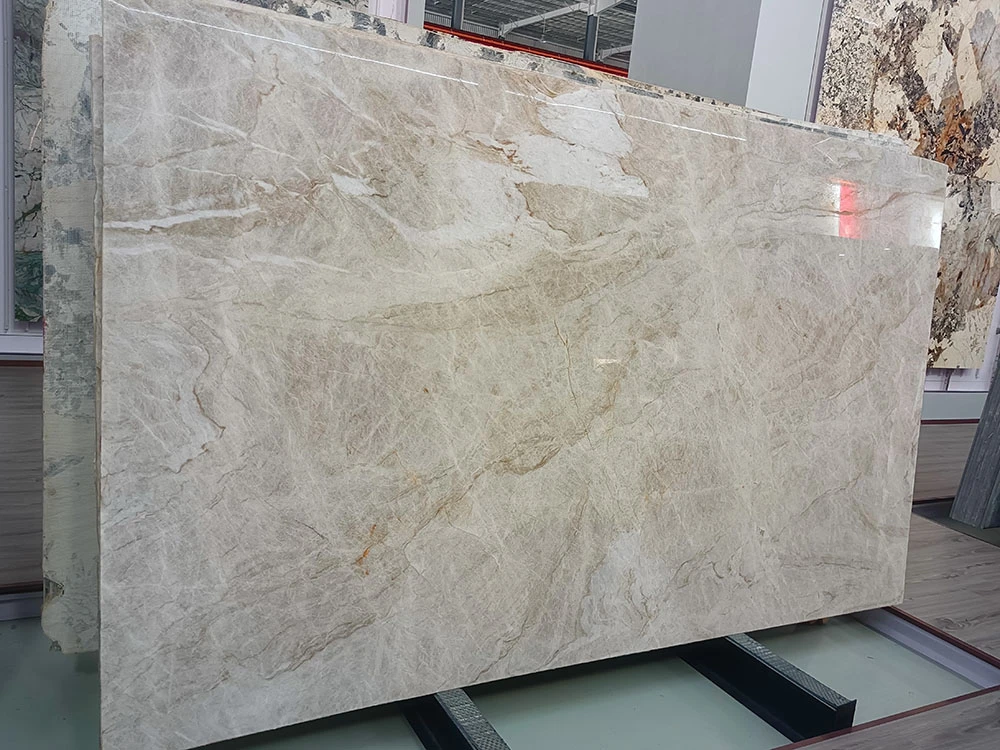
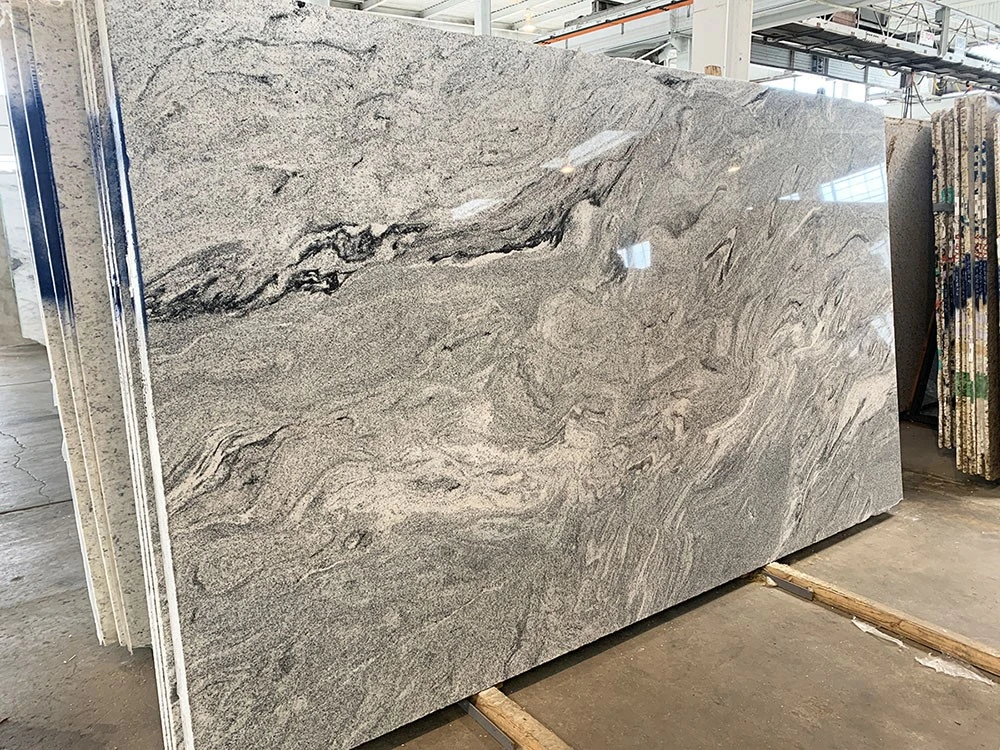
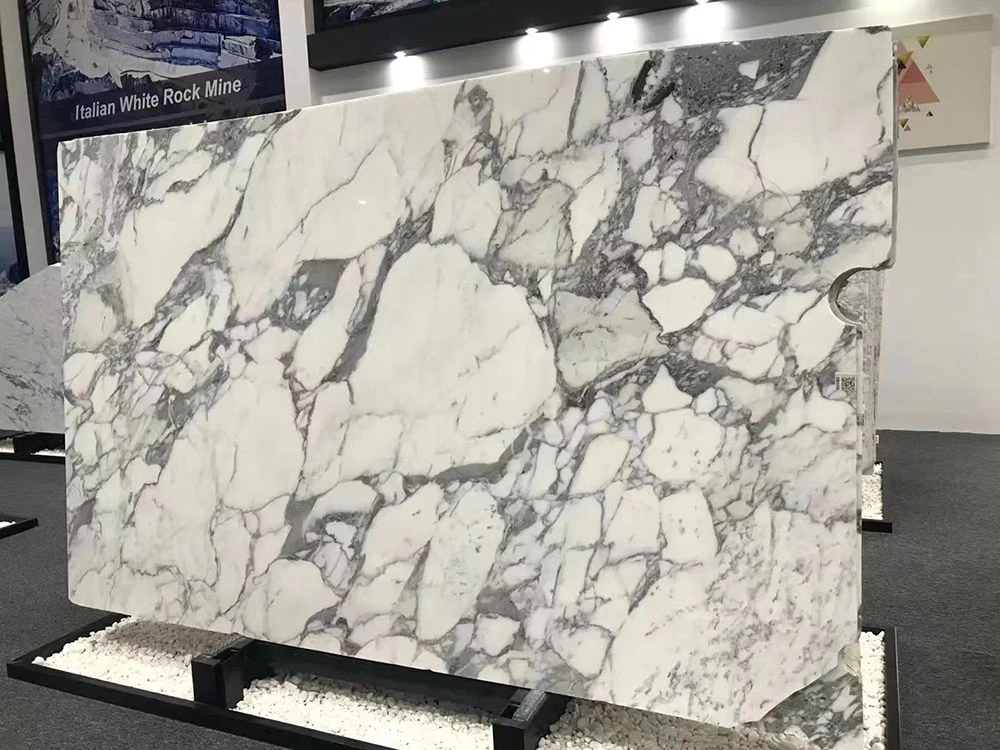
Why Mohs 7 Quartzite Performs Better Under Daily Scratching
Quartzite's resistance to scratching comes from its quartz-rich mineral structure.
Quartz has a Mohs hardness of 7, making it harder than common steel kitchen utensils and ordinary glass. This gives genuine quartzite an advantage in environments where metal tools and cookware repeatedly contact the countertop.
There is also a difference between scratching and chemical etching:
| Surface Damage | Main Cause | Relevant Property |
|---|---|---|
| Scratches | Contact with harder materials | Mohs hardness |
| Acid etching | Chemical reaction with minerals | Chemical resistance |
| Water staining | Liquid penetration and residue | Porosity and absorption |
| Chipping | Impact or concentrated edge loading | Toughness and fabrication quality |
| Cracking | Structural stress or inadequate support | Flexural strength and installation design |
A higher Mohs rating does not guarantee resistance to every form of surface damage. For example, a hard stone can still chip around an unsupported sink cutout.
Verify Genuine Quartzite Before Bulk Procurement
For importers and commercial contractors, material identification should happen before a large production order.
A practical verification process includes:
Mohs 7 reference testing: Check the scratch response using calibrated hardness picks.
Glass scratch comparison: Genuine quartz-rich quartzite can scratch ordinary glass, although this is only a preliminary field check.
Acid sensitivity screening: Check for carbonate-related etching using an appropriate controlled test.
Petrographic examination: Request mineralogical identification when the stone classification is uncertain.
A field scratch test alone cannot replace laboratory identification. Buyers should confirm the geological classification before approving the material for a large commercial installation.
How to Prevent Wear in High-Traffic Commercial Spaces
A commercial countertop may receive hundreds of daily contacts from utensils, cookware, cleaning equipment and food preparation tools. Even a stone with Mohs hardness 7 requires correct detailing, fabrication and maintenance.
For large commercial projects, the objective is not simply to select the hardest material. It is to reduce the combined effects of abrasion, impact, moisture, chemicals and installation stress.
Surface Finish Selection: Polished vs. Honed
The surface finish affects the visibility of scratches, cleaning requirements and the appearance of daily wear.
| Finish | Surface Characteristics | Commercial Application |
|---|---|---|
| Polished | Reflective surface with visible gloss | Hotel reception counters, luxury bars |
| Honed | Smooth, matte appearance | Restaurant counters, commercial kitchens |
| Leathered | Textured surface with reduced reflection | Bar tops, hospitality interiors |
| Brushed | Mechanically textured surface | Feature counters, selected commercial interiors |
A polished finish does not increase the intrinsic Mohs hardness of the stone. It changes the surface appearance and can make certain scratches more visible under directional lighting.
For heavily used counters, sample approval under actual project lighting is recommended before production.
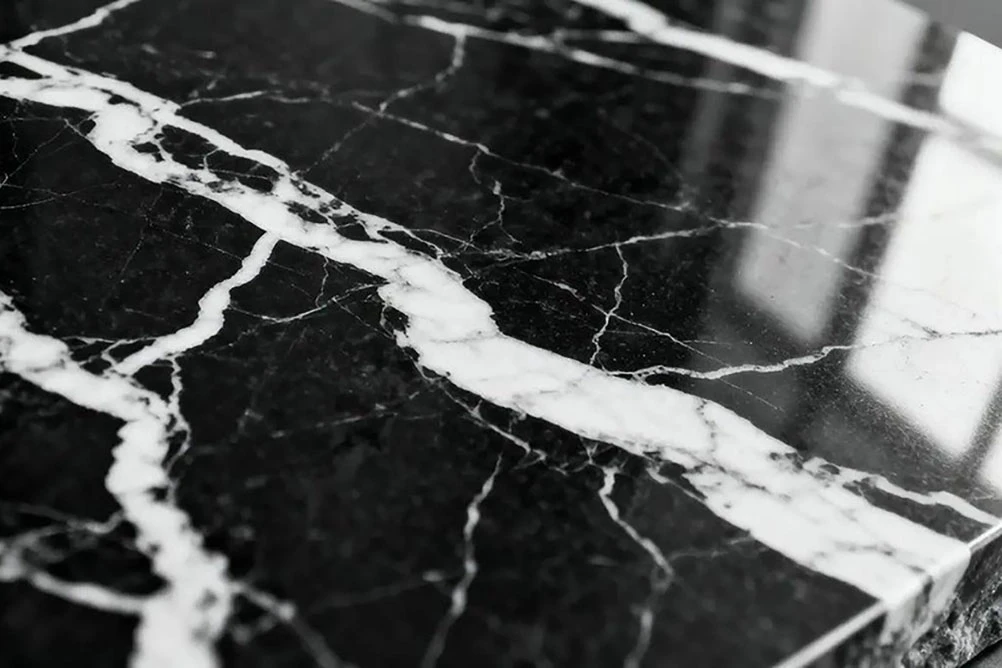
Polished
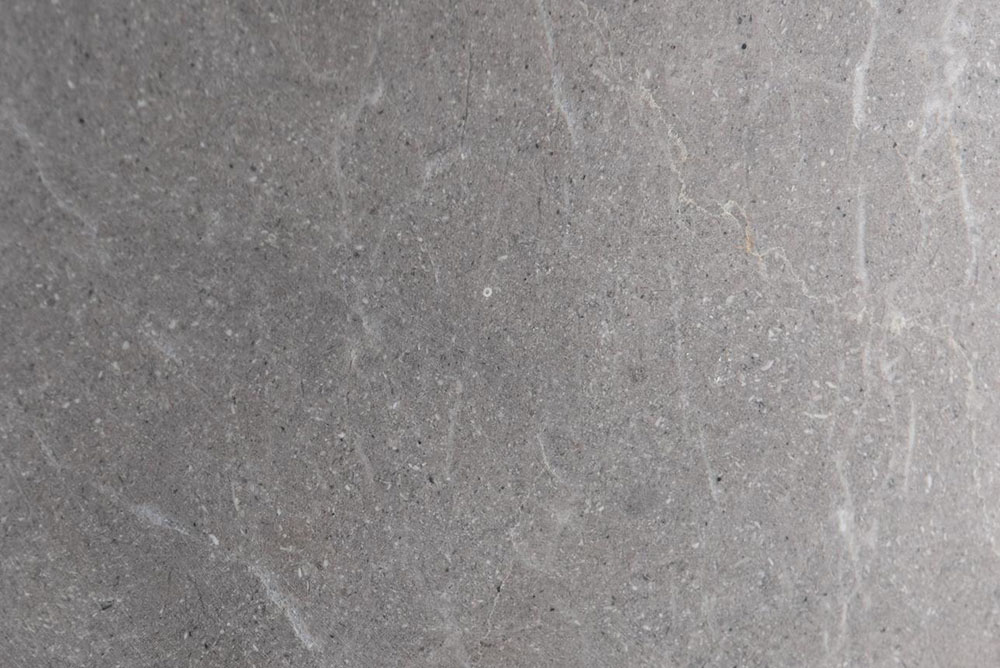
Honed
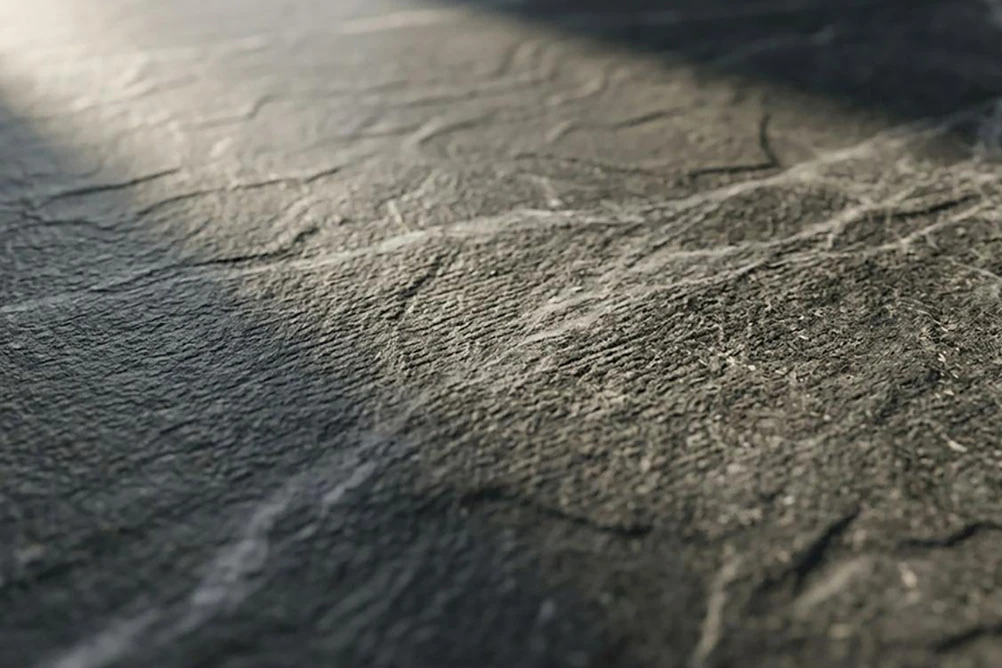
Leathered
Edge Profile and Thickness: 20–30 mM Countertop Design
Countertop thickness and edge geometry influence structural performance, particularly around sink openings, unsupported spans and cantilevered sections.
| Design Parameter | Common Specification | Engineering Consideration |
|---|---|---|
| Slab thickness | 20 mm | Suitable where support and structural design permit |
| Slab thickness | 30 mm | Greater section depth for selected applications |
| Edge profile | Eased edge | Reduces sharp exposed corners |
| Edge profile | Bullnose | Rounded exposed edge |
| Sink cutout | CNC machining | Accurate geometry and controlled edge finishing |
| Overhang | Project-specific | Requires structural support assessment |
These are common design options, not universal structural limits. Final thickness and support requirements must be checked against slab strength, span, cutout geometry, loading and installation conditions.
CNC waterjet cutting can be used for selected complex shapes and detailed cutouts. CNC bridge saws and edge profiling machines are also commonly used for countertop fabrication.
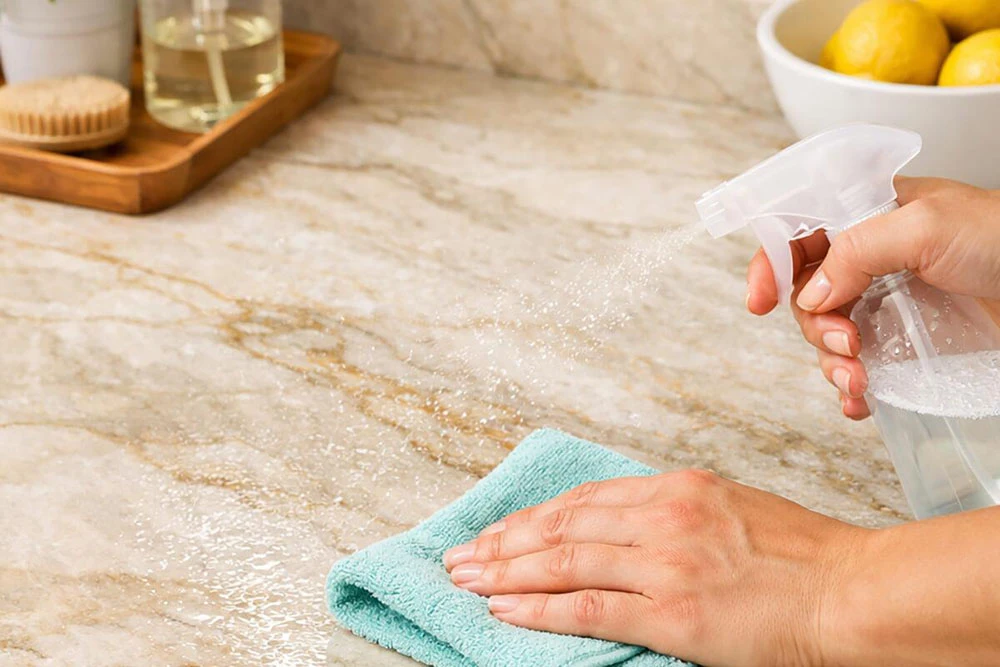
Daily Maintenance: Reduce Abrasion and Chemical Damage
Even genuine quartzite benefits from a controlled maintenance program.
For commercial operators:
Use cutting boards rather than cutting directly on the stone.
Use trivets for hot cookware and avoid uncontrolled thermal shock.
Clean with pH-neutral stone cleaners.
Avoid unapproved acidic or strongly alkaline cleaning chemicals.
Remove oil, wine and food residues promptly.
Inspect sink edges, joints and high-contact areas regularly.
For porous stone varieties, an impregnating sealer may help reduce liquid penetration. The need for sealing should be determined through absorption and stain testing rather than assumed from the stone's trade name.
Abrasion and Strength Testing: ASTM C1353 and ASTM C880
For projects with sustained commercial use, procurement teams should assess additional physical properties beyond Mohs hardness.
| Test Standard | Property Measured | Procurement Relevance |
|---|---|---|
| ASTM C97 | Water absorption and bulk specific gravity | Moisture penetration and density |
| ASTM C170 | Compressive strength | Resistance to compressive loading |
| ASTM C880 | Flexural strength | Resistance to bending |
| ASTM C99 | Modulus of rupture | Failure under bending load |
| ASTM C1353 | Abrasion resistance | Surface wear under specified abrasion conditions |
| ASTM D1308 | Chemical effects on coatings and surfaces | Chemical exposure evaluation |
ASTM C1353 is particularly relevant when assessing abrasion performance, but it is a standardized foot-traffic abrasion test, not a direct simulation of every kitchen countertop condition.
For a countertop project, the testing program should match the intended application and exposure conditions.
Third-Party Quality Inspection and Laboratory Reports
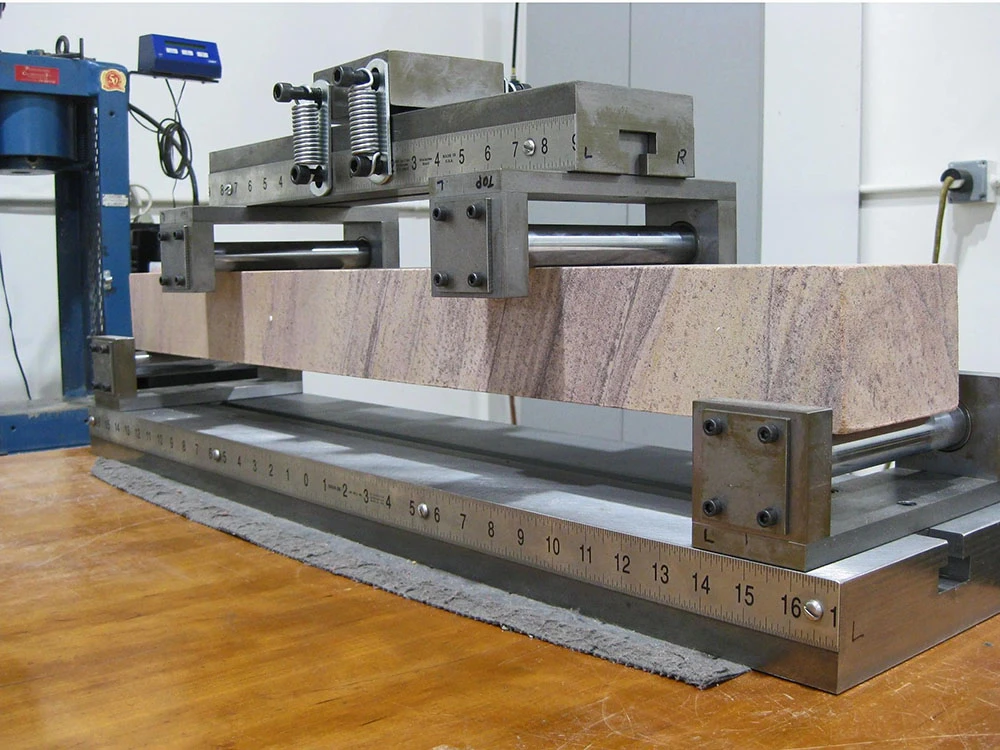
For international B2B procurement, a supplier's material description is not a substitute for independent test data.
A commercial stone specification should identify the material, testing method, reported result, specimen details and laboratory information. This allows procurement managers, architects and project consultants to evaluate whether the selected material meets the project requirements.
Recommended Third-Party Testing Documents
The following reports are useful when evaluating natural stone for commercial countertops.
| Report | Standard | Information to Review |
|---|---|---|
| Water Absorption | ASTM C97 | Absorption percentage by weight |
| Compressive Strength | ASTM C170 | Failure stress in MPa |
| Flexural Strength | ASTM C880 | Resistance to bending |
| Abrasion Resistance | ASTM C1353 | Abrasion test result |
| Petrographic Examination | ASTM C1721 | Mineralogical composition |
| Stain Resistance | ASTM D1308 | Response to specified chemical exposure |
The exact test requirements depend on the stone type and intended application. ASTM C97, for example, is used for dimension stone other than slate.
What Procurement Managers Should Check in a Test Report
Before approving a bulk order, verify the following:
Material identification
The report should identify the stone type and, where available, its quarry or geological source. This is particularly important for quartzite, which is sometimes incorrectly classified in commercial trading.
Test method and laboratory
Confirm the applicable ASTM or EN standard, laboratory identity, accreditation scope and report reference.
Test results and units
Check whether the results are reported in appropriate units, such as:
Water absorption: %
Compressive strength: MPa
Flexural strength: MPa
Bulk density: kg/m³
Sample representativeness
Confirm that the test specimens represent the material being supplied. Natural stone can vary between blocks, quarry benches and individual slabs.
Report date and production batch
For major projects, request recent test results and confirm whether the tested material corresponds to the current supply. The Natural Stone Institute recommends reassessing outdated technical data, particularly reports more than three years old.
Batch Inspection and Production Quality Control
Laboratory testing should be combined with factory-level inspection.
For bulk slab orders, a practical inspection process includes:
| Inspection Stage | Main Check | Acceptance Consideration |
|---|---|---|
| Block selection | Geological appearance and defects | Material consistency |
| Slab production | Thickness and dimensions | Project drawing requirements |
| Surface inspection | Cracks, fissures and resin repairs | Approved sample and specifications |
| Dry-lay inspection | Color and vein continuity | Bookmatched layout approval |
| Final inspection | Finish, edges and dimensional accuracy | Approved quality standard |
| Export packing | Wooden bundles and internal protection | Export and shipping requirements |
For premium projects, bookmatched layout approval should be completed before final cutting. This helps prevent vein alignment problems during installation.
Export packaging should use properly secured wooden bundles, with fumigated wooden packaging where required by applicable import regulations. ISPM 15 compliance should be verified for regulated international shipments.
Why Work with a China Natural Stone Manufacturer and Supplier?
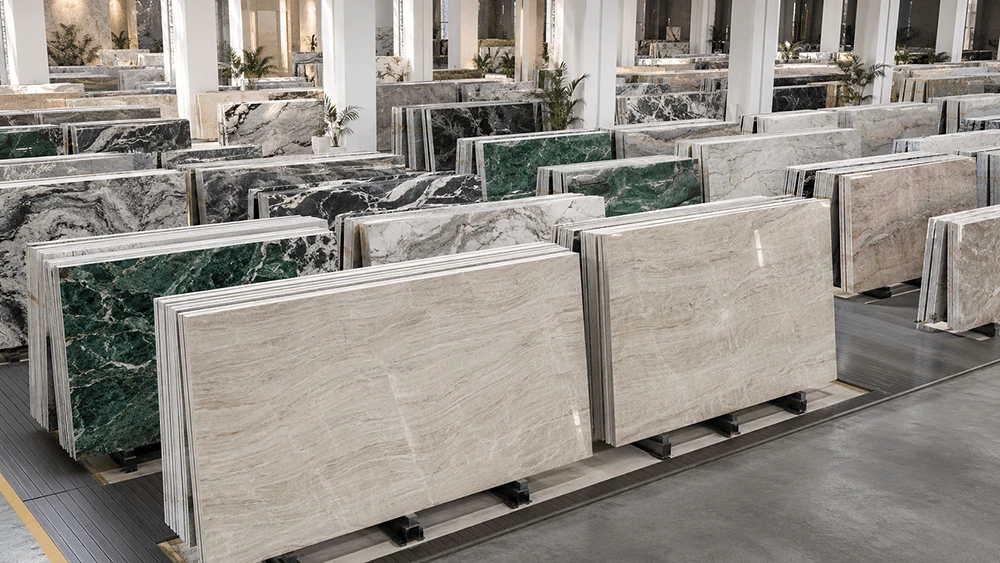
For international distributors, fabricators and commercial contractors, selecting a natural stone manufacturer in China involves more than comparing the FOB price per square meter.
Material consistency, slab selection, fabrication accuracy and export handling all influence the final project cost.
Longton Stone supplies natural stone materials and customized stone products for international B2B buyers.
When evaluating a manufacturer or factory for commercial countertop procurement, buyers should review:Material sourcing: Confirm stone classification, available blocks and slab selection.
Production control: Review cutting, polishing and CNC processing capabilities.
Dimensional inspection: Check thickness, length, width and edge tolerances against approved drawings.
Visual approval: Confirm slab photographs, vein matching and dry-lay inspection records.
Export preparation: Verify bundle protection, loading arrangements and shipping documentation.
Project communication: Confirm drawings, sample approvals, production schedules and inspection procedures.
For projects requiring multiple slabs, the approved reference slab and dry-lay arrangement should be used as the basis for batch acceptance.
Request a Commercial Countertop Quotation
To prepare a practical quotation, buyers should provide:
| Required Information | Example |
|---|---|
| Stone type | Natural Quartzite |
| Material selection | Approved color and slab reference |
| Thickness | 20 mm or 30 mm |
| Finish | Polished, honed or leathered |
| Quantity | Number of slabs or total m² |
| Processing | Cut-to-size, edge profiling or CNC |
| Destination | Port or delivery address |
| Quality requirements | ASTM reports and inspection criteria |
Select Countertops by Measured Performance, Not Appearance Alone
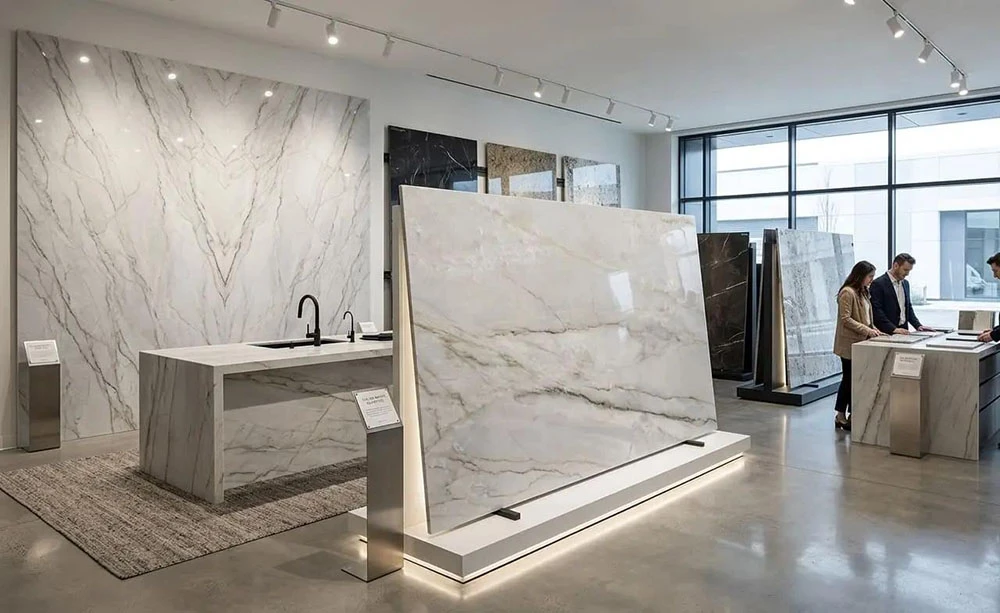
Mohs hardness is an important starting point when selecting natural stone for commercial countertops, but it should never be the only purchasing criterion. Genuine quartzite, with quartz at Mohs 7, offers strong scratch resistance compared with calcite-rich marble. Its suitability for a specific project must still be confirmed through water absorption, flexural strength, abrasion and chemical resistance testing.
For distributors, hotel contractors and commercial project buyers, the most reliable procurement approach combines verified stone classification, third-party laboratory reports, controlled factory inspection and approved slab selection before bulk production.
A qualified natural stone manufacturer should be able to provide clear material information, dimensional inspection records, fabrication details and export packaging documentation. These controls help reduce material disputes, installation problems and long-term maintenance costs.
For buyers sourcing natural quartzite for commercial countertops, kitchen islands and hospitality projects, explore our Natural Quartzite Collection to view available stone varieties, slab patterns and material options. Longton Stone supplies natural quartzite slabs for wholesale distribution and customized project requirements.
Explore Our Natural Quartzite Collection →