


High-traffic flooring mosaics are engineered tile systems with abrasion resistance ≥ PEI IV, water absorption ≤ 0.5%, and compressive strength ≥ 120 MPa. Suitable materials include porcelain, sintered glass, and dense natural stone mosaics with controlled porosity and anti-slip surfaces (R10–R12). Selection must prioritize wear resistance, slip rating, and maintenance cycle over aesthetics.
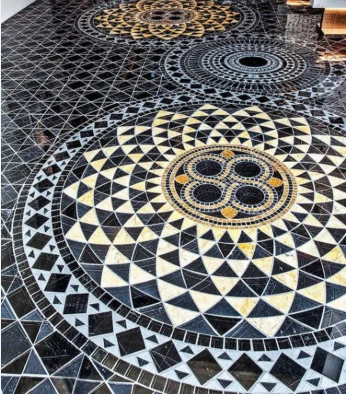
1. Material Selection Criteria for Commercial Mosaic Flooring
1.1 Key Physical Parameters
| Parameter | Recommended Range (Commercial Use) | Test Standard |
|---|---|---|
| Mohs Hardness | 5 – 7 | ASTM C1895 |
| Water Absorption | ≤ 0.5% | ASTM C373 |
| Abrasion Resistance (PEI) | IV – V | ASTM C1027 |
| Slip Resistance | R10 – R12 | DIN 51130 |
| Compressive Strength | ≥ 120 MPa | ASTM C170 |
| Breaking Strength | ≥ 1300 N | ISO 10545-4 |
Engineering Note:
For restaurant kitchens and hotel lobbies, abrasion resistance (PEI rating) is the primary failure determinant. Materials below PEI III show visible wear within 12–18 months under rolling load conditions.
1.2 Suitable Mosaic Materials
| Material Type | Mohs Hardness | Water Absorption | PEI Rating | Application Suitability |
|---|---|---|---|---|
| Porcelain Mosaic | 6 – 7 | ≤ 0.5% | IV – V | High-traffic retail, airports |
| Glass Mosaic | 5 – 6 | ≈ 0% | III – IV | Decorative zones, not main paths |
| Marble Mosaic | 3 – 4 | 0.2 – 0.6% | II – III | Low-traffic luxury areas |
| Granite Mosaic | 6 – 7 | ≤ 0.3% | IV – V | Outdoor & heavy-duty interiors |
Conclusion:
Porcelain and granite mosaics from a qualified manufacturer or factory supplier are the only stable solutions for continuous pedestrian load (>10,000 steps/day).
2. Abrasion Resistance Analysis
2.1 Wear Mechanisms in Commercial Spaces
| Load Type | Impact on Surface | Risk Level |
|---|---|---|
| Foot traffic | Micro-scratches, polish loss | Medium |
| Rolling loads (carts) | Edge chipping, glaze wear | High |
| Sand/dirt abrasion | Surface erosion | High |
| Chemical exposure | Surface dulling, discoloration | Medium |
Technical Insight:
Silica particles (Mohs 6–7) carried by footwear are the main abrasion source. Flooring mosaics must exceed this hardness threshold to prevent rapid wear.
2.2 PEI Rating vs Application
| PEI Level | Traffic Level | Typical Use Case |
|---|---|---|
| I | Very light | Wall only |
| II | Light | Residential bathrooms |
| III | Moderate | Residential floors |
| IV | Heavy | Hotels, restaurants |
| V | Very heavy | Airports, shopping malls |
Procurement Recommendation:
Always specify PEI IV minimum for commercial procurement contracts. For public infrastructure, PEI V is mandatory.
Request Material Compatibility Report for Your Application
3. Case Studies: Restaurants & Hotels
3.1 Restaurant Flooring (High Oil & Traffic Exposure)
| Requirement | Specification |
|---|---|
| Slip Resistance | R11 minimum |
| Surface Finish | Matte or textured |
| Water Absorption | ≤ 0.5% |
| Maintenance Cycle | Daily cleaning + weekly degrease |
Observed Failure Case:
Glass mosaics installed in a fast-food chain showed surface scratching within 6 months due to abrasive cleaning pads.
Correct Solution:
Switch to porcelain mosaic tiles (PEI IV, matte finish) supplied by a wholesale manufacturer with mesh-mounted backing for faster installation.
3.2 Hotel Lobby Flooring (Aesthetic + Load Balance)
| Requirement | Specification |
|---|---|
| Compressive Strength | ≥ 150 MPa |
| PEI Rating | IV – V |
| Joint Width | 2 – 3 mm |
| Finish | Honed or anti-slip polished |
Observed Practice:
Luxury hotels often combine marble mosaics with porcelain borders. Marble provides visual value; porcelain handles main traffic paths.
4. Installation System for Commercial Mosaics
4.1 Standard Installation Workflow
| Step | Technical Requirement |
|---|---|
| Substrate Preparation | Flatness ≤ 3 mm / 2 m |
| Adhesive Selection | C2TES1 flexible adhesive (EN 12004) |
| Mosaic Mounting | Mesh-mounted sheets (300×300 mm typical) |
| Joint Filling | Epoxy grout (chemical resistance) |
| Curing Time | ≥ 24 hours before light traffic |
Engineering Note:
Epoxy grout reduces water penetration and increases system durability by 30–50% compared to cement grout.
4.2 Common Installation Failures
| Issue | Root Cause | Solution |
|---|---|---|
| Tile detachment | Inadequate adhesive bonding | Use polymer-modified adhesive |
| Uneven surface | Poor substrate leveling | Apply self-leveling compound |
| Grout discoloration | Incorrect grout type | Use epoxy-based grout |
5. Supply Chain Considerations (B2B Procurement)
5.1 Manufacturer Capabilities Checklist
| Capability | Requirement |
|---|---|
| Production Capacity | ≥ 20,000 m²/month |
| Customization (OEM) | Pattern, size, color flexibility |
| Quality Control | ISO 9001 / CE certification |
| Packaging | Wooden crate + foam protection |
| Breakage Rate | ≤ 1.5% during shipment |
5.2 Custom Mosaic Development
| Parameter | Typical Range |
|---|---|
| Chip Size | 15×15 mm to 50×50 mm |
| Sheet Size | 300×300 mm or 305×305 mm |
| Thickness | 6 – 10 mm |
| Lead Time | 20 – 35 days |
6. FAQ (Procurement Focus)
Q1: What is the MOQ for wholesale mosaic flooring orders?
MOQ typically ranges from 100–300 m² per design. OEM customized patterns may require 500 m² minimum due to mold and production setup.
Q2: What is the lead time for customized mosaic patterns?
Standard lead time is 20–35 days after sample confirmation. Complex patterns (multi-material or waterjet designs) may extend to 45 days.
Q3: What is the typical shipping breakage rate for mosaic tiles?
With reinforced packaging (wooden crates + foam), breakage is controlled at ≤ 1.5%. Poor packaging can increase loss to 3–5%.